12 Best Referral Marketing Software Platforms of 2026
12 Best Referral Marketing Software Platforms of 2026

Ollie Efez
October 06, 2025•24 min read•Updated Jul 10, 2026

The best referral marketing software depends on who does your referring. If your advocates are existing customers earning credits or discounts, you want a customer-referral tool. If they are partners, creators, or power users earning cash commissions, you want affiliate-style software like LinkJolt (from $19.99/mo with 0% transaction fees, automated Stripe Connect payouts, and a Discovery marketplace where partners find your program). Most SaaS teams discover they need the second kind once rewards become cash rather than account credit.
This guide reviews 12 platforms across both camps so you can match the tool to your program model, with each profile covering pricing, strengths, weaknesses, and the team it fits best. If you are building a cash-commission program for a SaaS product, start with the SaaS startup guide, then compare the dedicated platforms below. If you are deciding what to pay partners, the 2026 SaaS affiliate benchmarks show the commission rates 116 real campaigns offer.
1. LinkJolt
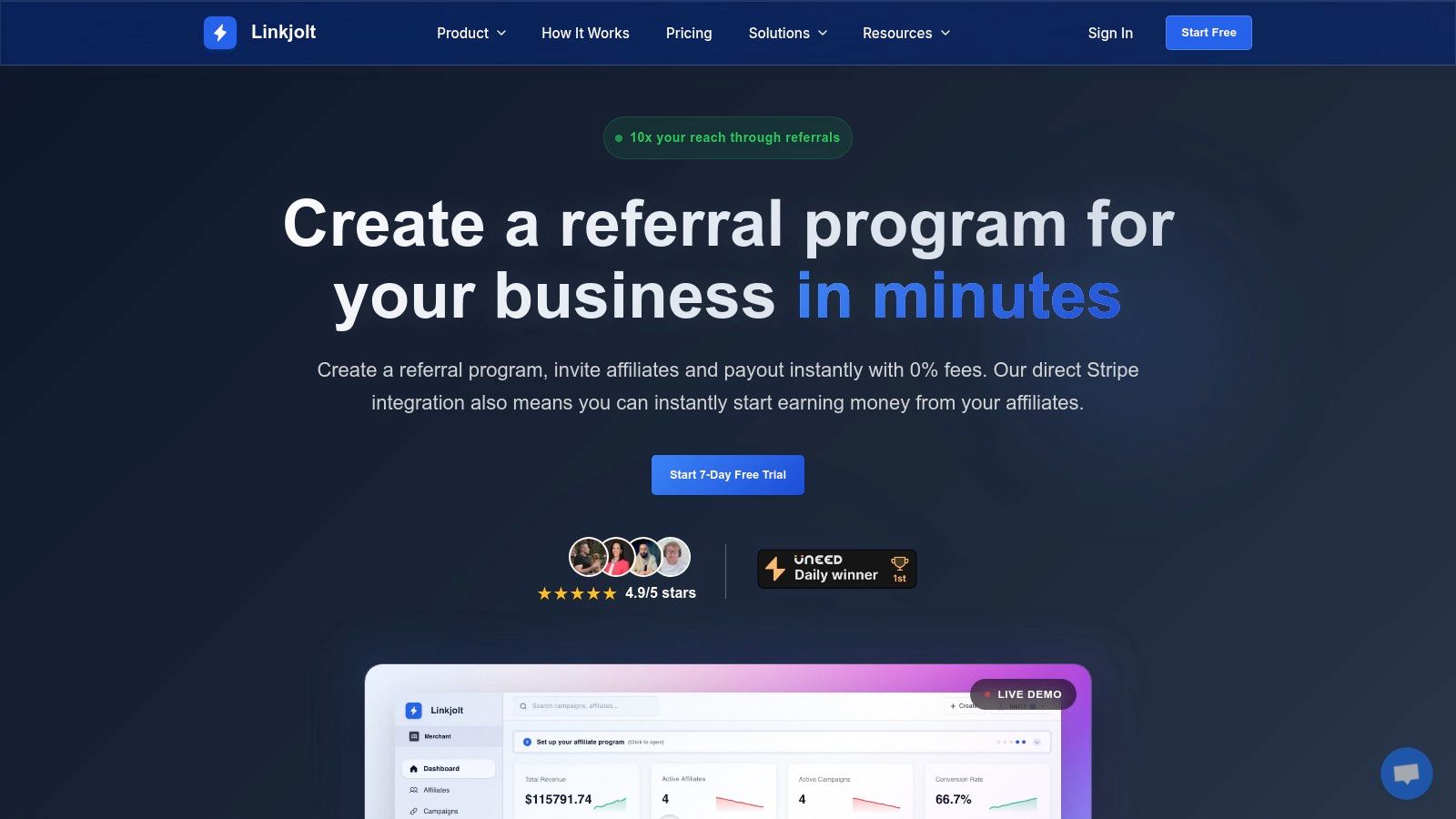
LinkJolt stands out as a powerful and exceptionally user-friendly choice, making it one of the best referral marketing software options available, particularly for SaaS businesses. Its core strength lies in its simplicity and speed. You can genuinely launch a sophisticated affiliate program in minutes without needing a developer, thanks to its intuitive setup process and direct integrations.
The platform is designed to eliminate common friction points in affiliate management. Its seamless integration with Stripe and Paddle for direct, instant commission payouts is a significant advantage. This feature, combined with zero transaction fees on those payouts, makes it a highly cost-effective solution as your program scales.
Key Features & Use Cases
LinkJolt excels with its robust, yet easy-to-navigate feature set. The real-time analytics dashboard provides immediate, actionable insights into clicks, conversions, and revenue, allowing for quick strategic adjustments.
- Powerful Link Generation: The platform’s industry-leading referral link generator creates unique tracking URLs and custom coupon codes, empowering affiliates with effective promotional tools. This is ideal for SaaS companies running targeted campaigns with specific influencers or partners.
- Comprehensive Affiliate Portal: Affiliates get their own dashboard to monitor performance and access marketing materials. This self-service model reduces your administrative workload and keeps your partners engaged and motivated.
- Flexible Commission Structures: Easily set up recurring commissions (a must for subscription-based SaaS) or fixed one-time rewards. This flexibility ensures your program aligns perfectly with your business model.
- Robust Fraud Detection: Built-in security systems protect your marketing spend by identifying and blocking invalid or fraudulent activities, ensuring the integrity of your program's ROI.
Pricing
LinkJolt offers scalable plans suitable for various business sizes, including a risk-free 7-day free trial of its Professional plan.
- Starter: From $13.99/month (billed annually)
- Professional: From $41.99/month (billed annually)
- Enterprise: Custom pricing
Pros & Cons
Best for: SaaS startups, enterprise companies, and marketing agencies looking for a powerful, scalable, and easy-to-use affiliate management platform without the technical overhead.Website: https://linkjolt.io
2. ReferralCandy
ReferralCandy is a powerhouse in the referral marketing software space, specifically designed for ecommerce businesses. Its major strength lies in its simplicity and near-instant setup, especially for stores built on platforms like Shopify, BigCommerce, and WooCommerce. The platform automates the entire referral process, from inviting new customers post-purchase to tracking successful referrals and paying out rewards.
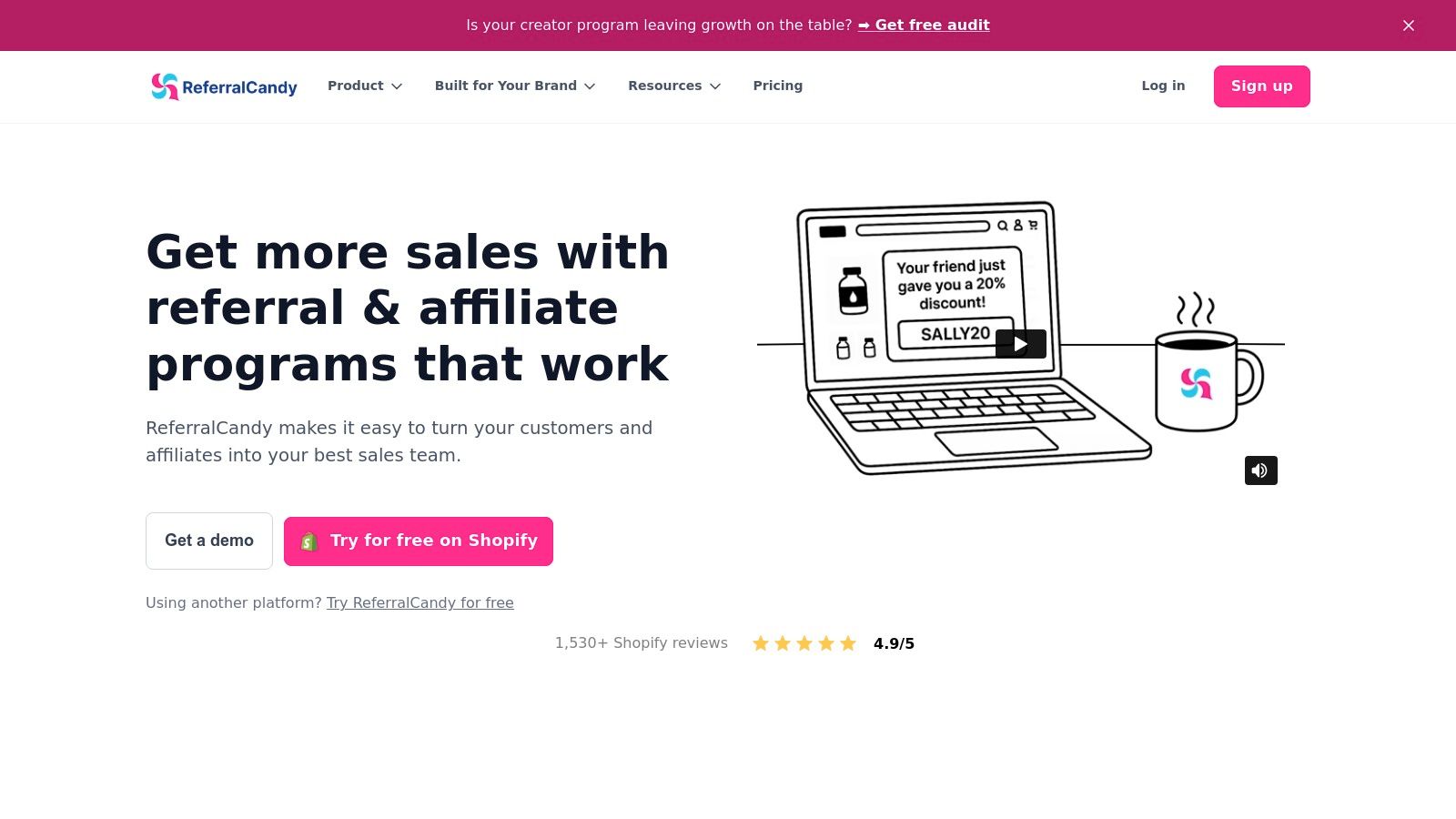
Unlike competitors that require complex configurations, ReferralCandy provides pre-built email templates and referral widgets that can be launched in under 30 minutes. This makes it an ideal choice for lean marketing teams or small business owners who need a "set it and forget it" solution that just works. It also handles both referral and affiliate marketing, a dual functionality not always found in entry-level tools. For those just starting out, you can learn more about setting up an affiliate program to see how these two strategies can work together.
Key Features and Pricing
ReferralCandy’s pricing is uniquely tied to performance. It combines a monthly flat fee with a small commission on sales generated through the platform. This model aligns their success with yours, making it a low-risk option for growing brands.
- Best For: Ecommerce stores (especially on Shopify) looking for a fast, automated, and scalable referral solution.
- Standout Feature: The success-based commission pricing model makes it accessible for startups and ensures you only pay more when you earn more.
- Pricing: Starts with a base monthly fee plus a tiered commission on successful referral sales. This commission rate decreases as your referral revenue increases, rewarding growth. An optional "Boost" add-on is available for advanced fraud protection and reward features.
Pros & Cons
- Pros: Extremely fast setup, excellent documentation, scalable pricing, strong native integrations with ecommerce and email platforms.
- Cons: The success fee can become a significant variable cost for high-volume stores, and advanced customization requires upgrading to higher-priced tiers.
Website: https://www.referralcandy.com
3. Referral Rock
Referral Rock is one of the most flexible pieces of referral marketing software available, designed to serve a broad audience from B2C ecommerce brands to complex B2B service companies. Its core advantage is its adaptability; it allows businesses to build and launch a referral program without writing a single line of code, using hosted member portals and landing pages. This makes it an excellent choice for teams that need a robust solution without heavy developer involvement.
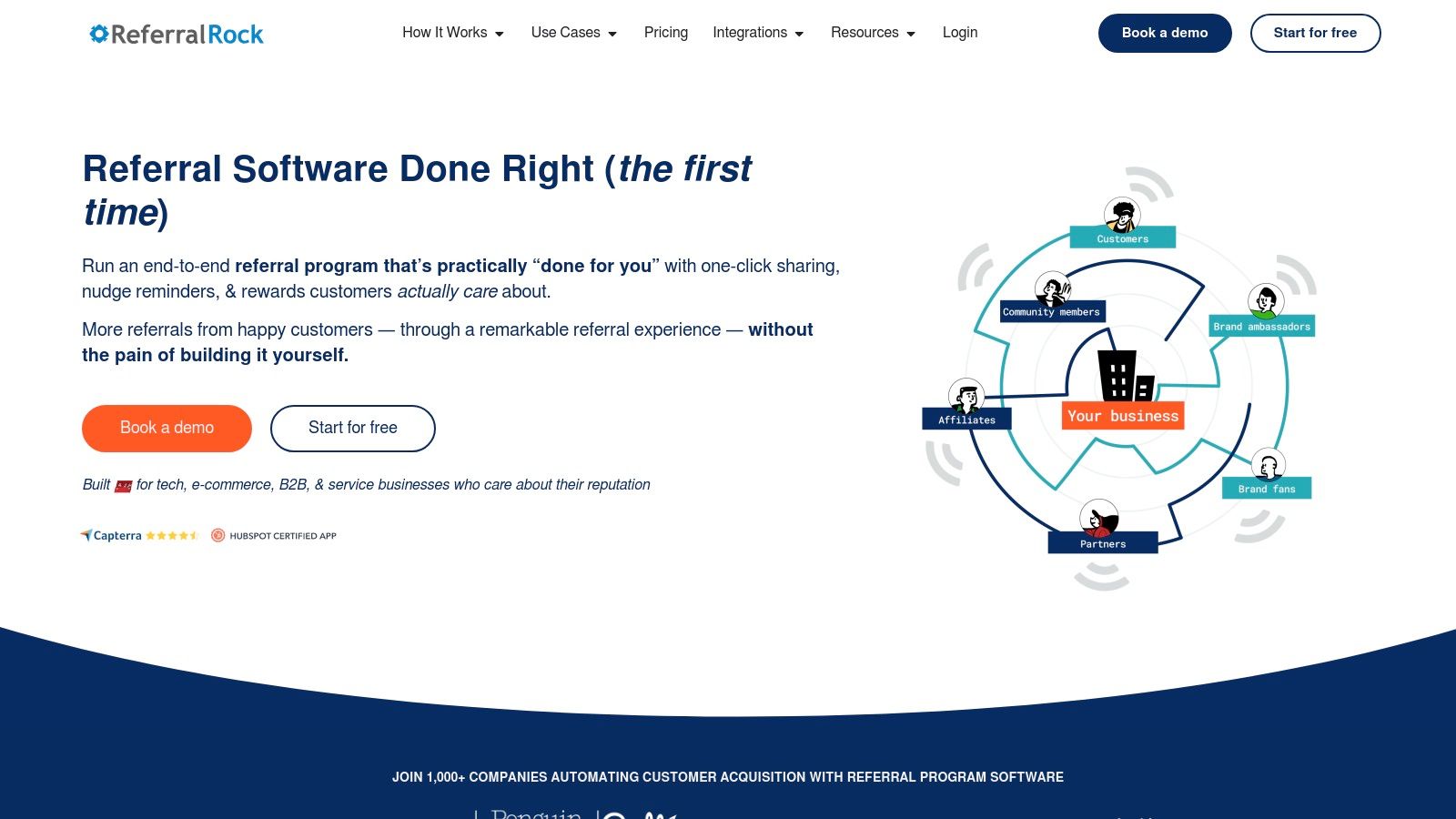
Unlike many competitors that focus solely on one type of business, Referral Rock’s platform is built to handle diverse reward structures and sales cycles. It seamlessly integrates with major CRMs like HubSpot and Salesforce alongside ecommerce platforms like Shopify, bridging the gap between sales and marketing. The platform's concierge onboarding service, included with annual plans, ensures users get a high-touch setup experience tailored to their specific goals.
Key Features and Pricing
Referral Rock offers transparent, tiered pricing that scales from small businesses to enterprise-level needs, making it clear what you get at each stage. Their plans are structured around the number of members (advocates) in your program, which is a straightforward way to manage costs as you grow.
- Best For: B2B service businesses and B2C companies that need advanced reward logic and deep CRM integration.
- Standout Feature: Highly advanced and customizable reward logic, including milestone, tiered, recurring, and multi-step rewards that can be adapted to any sales funnel.
- Pricing: Begins with a monthly plan for a set number of program members, with higher tiers offering more members, dedicated support, and advanced features. A 30-day free trial is available to test the platform.
Pros & Cons
- Pros: Robust reward management for complex programs, transparent pricing, strong integration capabilities, and a 30-day free trial.
- Cons: Costs can increase with add-ons and overages for high-volume programs, and some advanced CRM integrations require an extra fee.
Website: https://referralrock.com
4. Friendbuy
Friendbuy is an enterprise-grade referral and loyalty platform designed for large, direct-to-consumer brands that need deep customization and strategic oversight. It excels at providing brands with highly configurable referral widgets, sophisticated reward rules, and integrated loyalty program modules. The platform is built to handle significant scale, making it a go-to choice for established companies looking to optimize customer acquisition and retention.
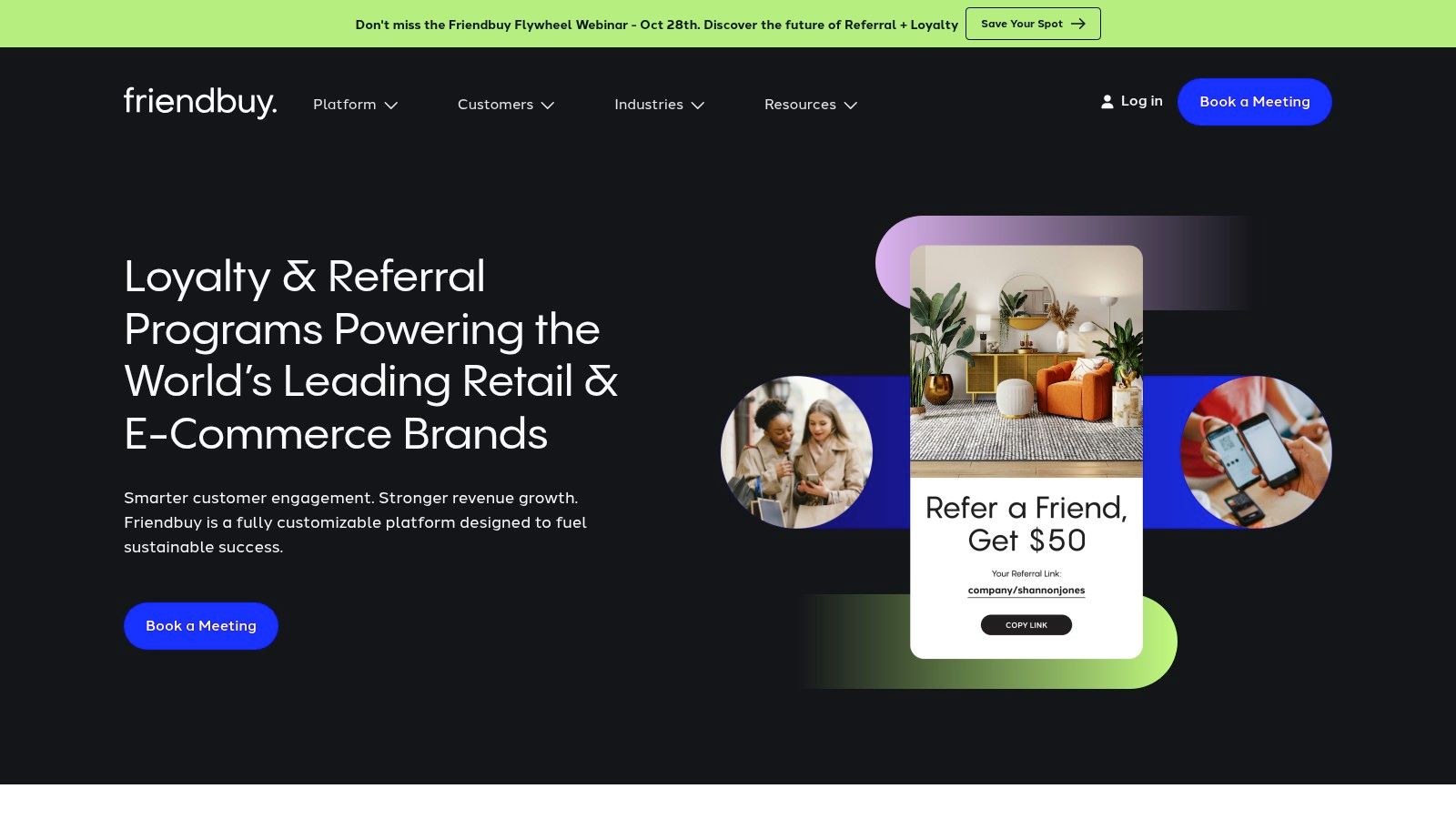
Unlike more basic tools, Friendbuy offers a hands-on, strategic onboarding process and dedicated success support for its advanced tiers. This partnership approach ensures that large brands can fully leverage its powerful features, from A/B testing referral offers to creating complex, tiered loyalty systems. For businesses that need this level of control, it's essential to pair it with the best affiliate tracking software to create a comprehensive performance marketing stack.
Key Features and Pricing
Friendbuy's pricing is structured in tiers that are often aligned with a company's sales volume or monthly active users, reflecting its focus on scaling businesses. While specific pricing usually requires a sales call, the plans are clearly differentiated by feature sets, API access, and the level of customer support provided.
- Best For: Enterprise ecommerce and large DTC brands needing a highly customizable, scalable referral and loyalty solution with strategic support.
- Standout Feature: The combination of a robust rules engine for rewards and dedicated customer success management, which helps large teams maximize ROI.
- Pricing: Tiered pricing based on business size and usage. Entry-level plans are available, but enterprise features and full API access require custom quotes from their sales team.
Pros & Cons
- Pros: Powerful customization for widgets and emails, strong fit for Shopify Plus and enterprise-level brands, well-regarded customer success involvement.
- Cons: Higher entry pricing compared to starter tools, and accessing the most powerful features requires contacting sales for a custom plan.
Website: https://www.friendbuy.com
5. Talkable
Talkable is an enterprise-grade referral and loyalty platform built for high-growth ecommerce and retail brands that need more than just a software tool. It stands out by offering a managed service model, acting as a strategic partner to design, launch, and optimize referral campaigns. This hands-on approach is ideal for large teams that want to maximize ROI without dedicating extensive internal resources to program management.
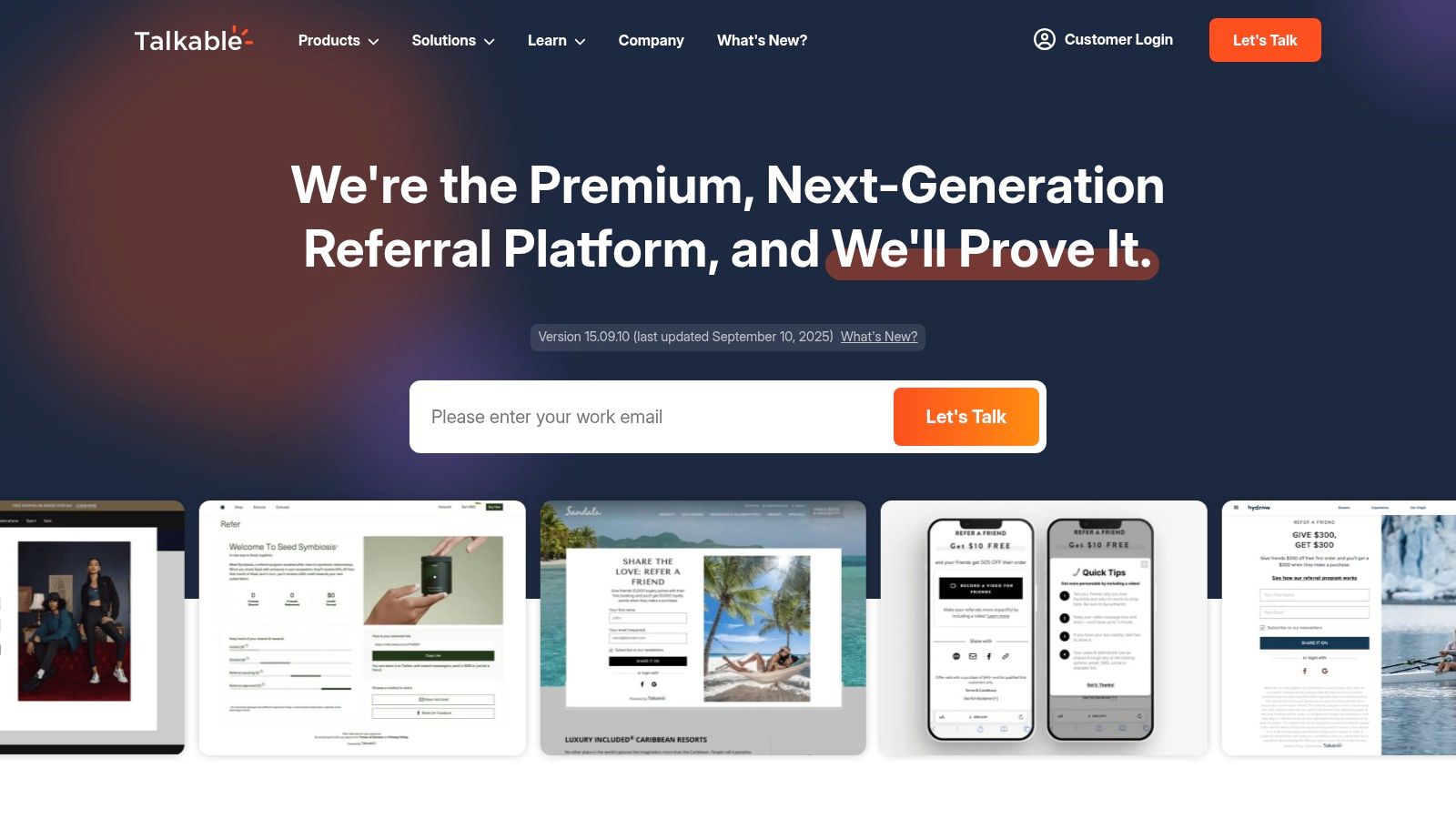
Unlike platforms that rely on a cost-per-acquisition model, Talkable uses a flat monthly fee, which provides predictable budgeting for finance departments. The platform is highly sophisticated, offering powerful A/B testing, configurable fraud controls, and a flexible campaign editor. Its innovative features, like AI-assisted campaigns and consumer-generated video referrals, make it a forward-thinking choice for established brands looking to push the boundaries of their referral marketing software.
Key Features and Pricing
Talkable's pricing is tailored to enterprise clients and is not publicly available. It's tiered based on a company's revenue and requires a 12-month contract along with a first-month implementation fee. This structure reflects its partnership-focused, high-touch service model.
- Best For: Large-scale retail and ecommerce businesses seeking a fully managed, premium referral and loyalty solution with predictable costs.
- Standout Feature: The combination of a managed service model and a flat-fee pricing structure. This provides strategic expertise and budget predictability, a rare find in the space.
- Pricing: Custom pricing based on company revenue, structured as a flat monthly fee. Requires an annual contract and a one-time implementation fee.
Pros & Cons
- Pros: Strong strategic partnership and managed services, sophisticated A/B testing and fraud controls, flat-fee pricing is preferred by enterprise finance teams.
- Cons: Pricing is not public and can be a significant investment, requires a 12-month contract and an implementation fee, making it less accessible for smaller businesses.
Website: https://www.talkable.com
6. SaaSquatch
SaaSquatch is a highly flexible referral and loyalty platform designed for digital-first businesses, with a strong focus on SaaS, fintech, and subscription models. Its core strength is enabling companies to build deeply embedded, native in-app referral experiences rather than relying on external landing pages. The platform excels at creating complex, multi-tiered reward structures that drive long-term customer engagement and retention.
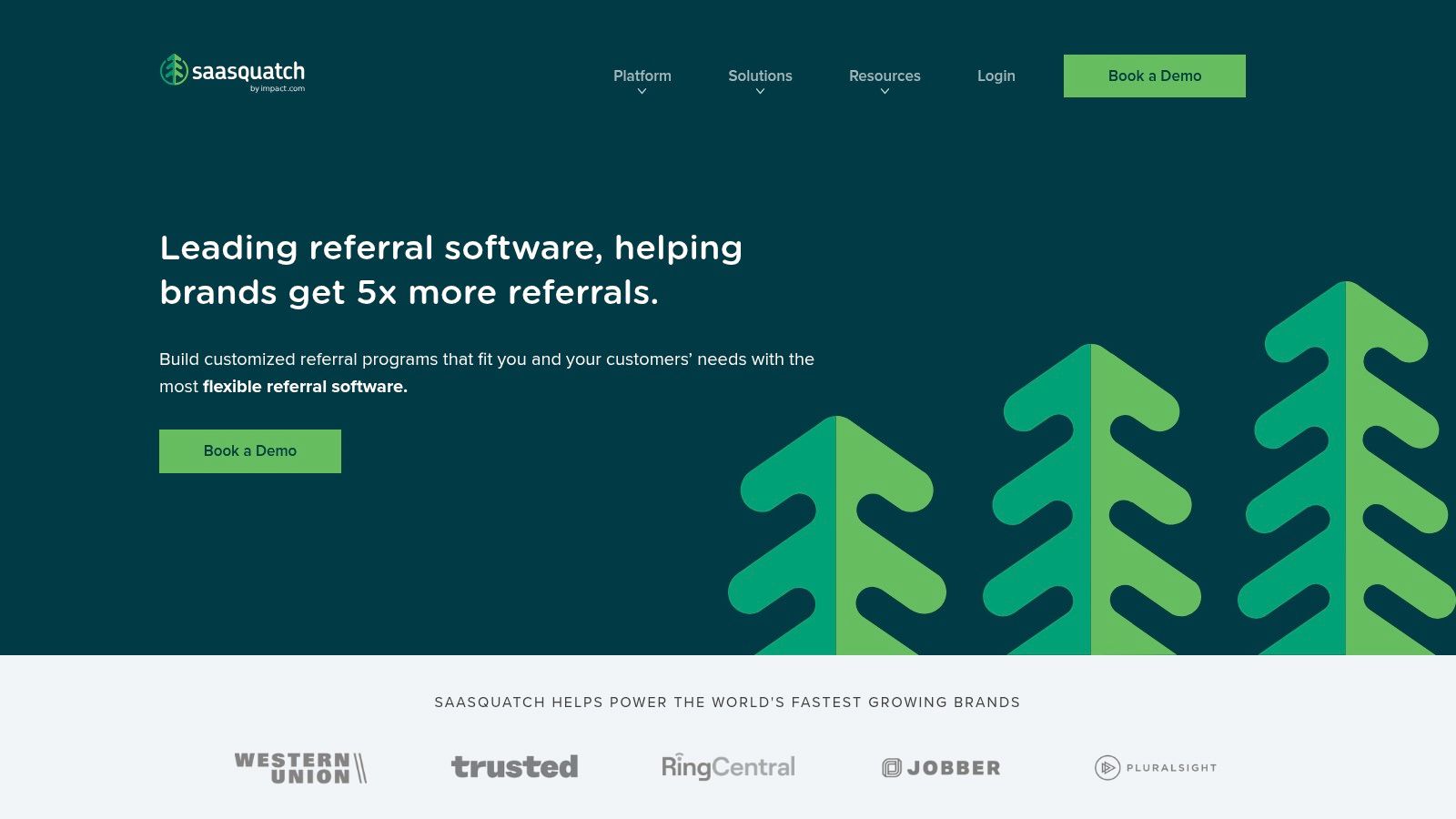
Unlike out-of-the-box solutions, SaaSquatch provides the tools for developers to integrate referral and loyalty programs directly into the product journey. This makes it an ideal choice for mid-market and enterprise clients who prioritize a seamless user experience and have the technical resources to implement it. Its program templates also allow for sophisticated campaigns that align with affiliate marketing best practices, helping brands build a cohesive growth strategy.
Key Features and Pricing
SaaSquatch's pricing is quote-based, reflecting its enterprise focus and the high degree of customization and support involved in implementation. The platform is built to handle complex reward logic, such as recurring rewards for ongoing subscriptions or tiered benefits that unlock as customers refer more users.
- Best For: SaaS, fintech, and subscription-based companies that need a deeply integrated, customizable referral and loyalty program.
- Standout Feature: The ability to build fully native, in-app referral programs that feel like a core part of the product experience.
- Pricing: Custom pricing is available upon request through a sales consultation. It is geared towards mid-market and enterprise-level businesses.
Pros & Cons
- Pros: Unmatched customization for native experiences, ideal for SaaS and subscription models, strong focus on customer retention and lifetime value.
- Cons: Pricing is not publicly available and requires a sales demo, requires developer resources for full implementation and customization.
Website: https://www.saasquatch.com
7. Mention Me
Mention Me is an enterprise-grade referral marketing software that leverages artificial intelligence and predictive analytics to help global brands acquire higher-value customers. Its core philosophy is moving beyond simple transaction-based referrals to foster genuine brand advocacy, focusing on metrics like Customer Lifetime Value (CLV). The platform is built for large-scale operations, using data to identify and engage customers most likely to refer others.
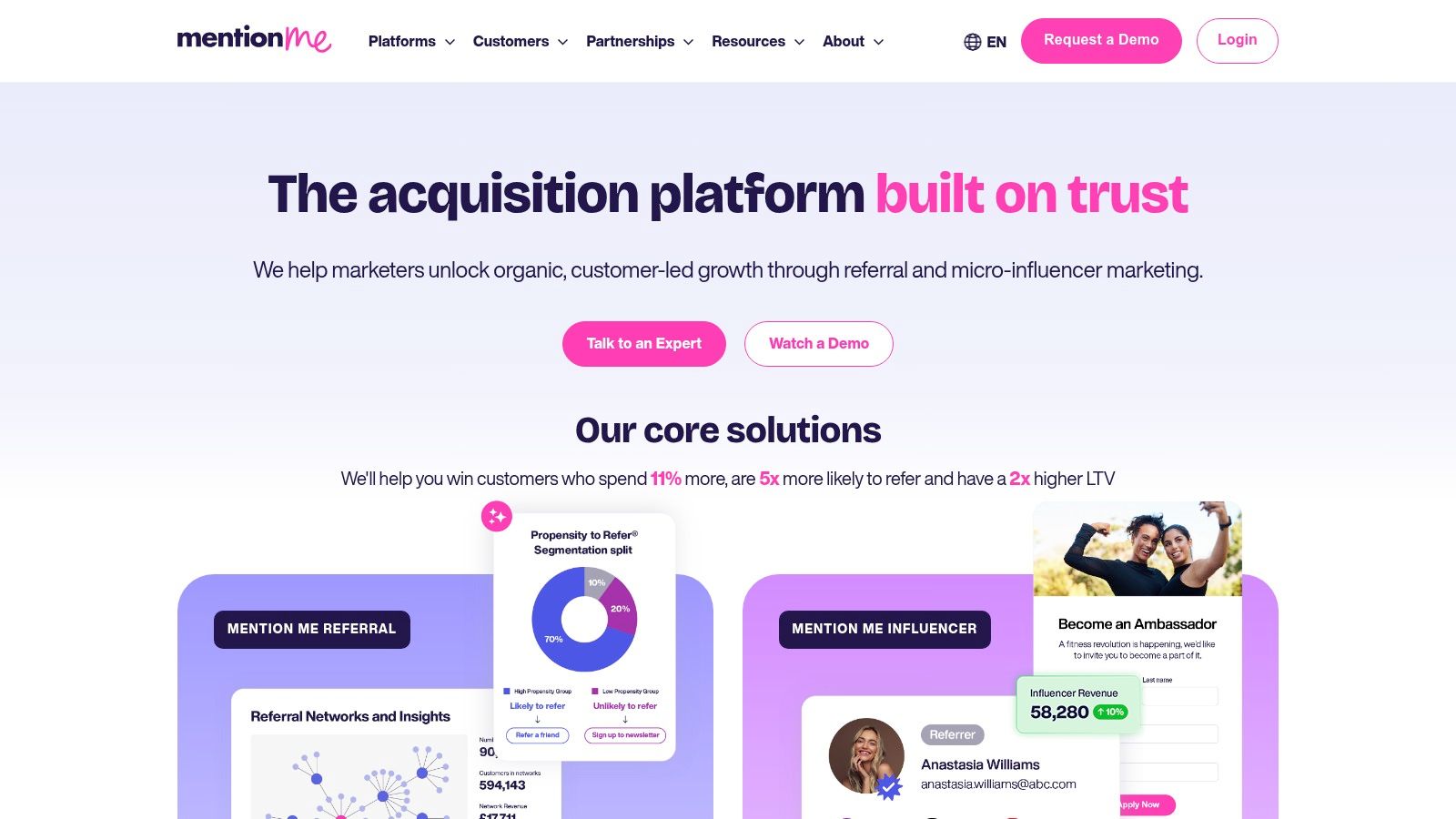
Unlike many platforms that rely on unique codes or links, Mention Me's standout "Name Share" feature allows customers to refer friends simply by telling them to enter their name at checkout. This reduces friction and mimics natural word-of-mouth recommendations. The platform's AI-driven segmentation and A/B testing capabilities allow brands to tailor offers and messaging to specific audience segments, optimizing for conversion and referral quality rather than just volume.
Key Features and Pricing
Mention Me's pricing is customized for enterprise clients and is not publicly listed. It involves a consultation to build a package that fits the specific needs of a large brand, often including dedicated support and strategic guidance. This approach ensures the solution is tailored to complex business goals.
- Best For: Enterprise-level retail and ecommerce brands seeking a sophisticated, data-driven referral solution to improve customer acquisition quality and CLV.
- Standout Feature: The "Propensity to Refer" predictive AI model, which analyzes customer data to identify potential super-advocates and target them with optimized referral campaigns.
- Pricing: Pricing is quote-based and tailored to enterprise requirements. It is positioned as a premium solution, so it is not suitable for small businesses or startups.
Pros & Cons
- Pros: Advanced AI and data analytics improve referral targeting and ROI, sophisticated A/B testing and segmentation, proven success with major global brands.
- Cons: Pricing is not transparent and is at an enterprise level, making it inaccessible for smaller companies. The platform's complexity may require more dedicated resources to manage effectively.
Website: https://www.mention-me.com
8. Viral Loops
Viral Loops is a growth-hacker’s toolkit, specializing in creating viral marketing campaigns beyond standard referral programs. Its strength lies in its extensive library of pre-built, no-code templates designed for specific outcomes like pre-launch waitlists, milestone referral campaigns, and viral giveaways. This makes it a go-to platform for startups and marketers looking to generate buzz and acquire users quickly without heavy engineering resources.
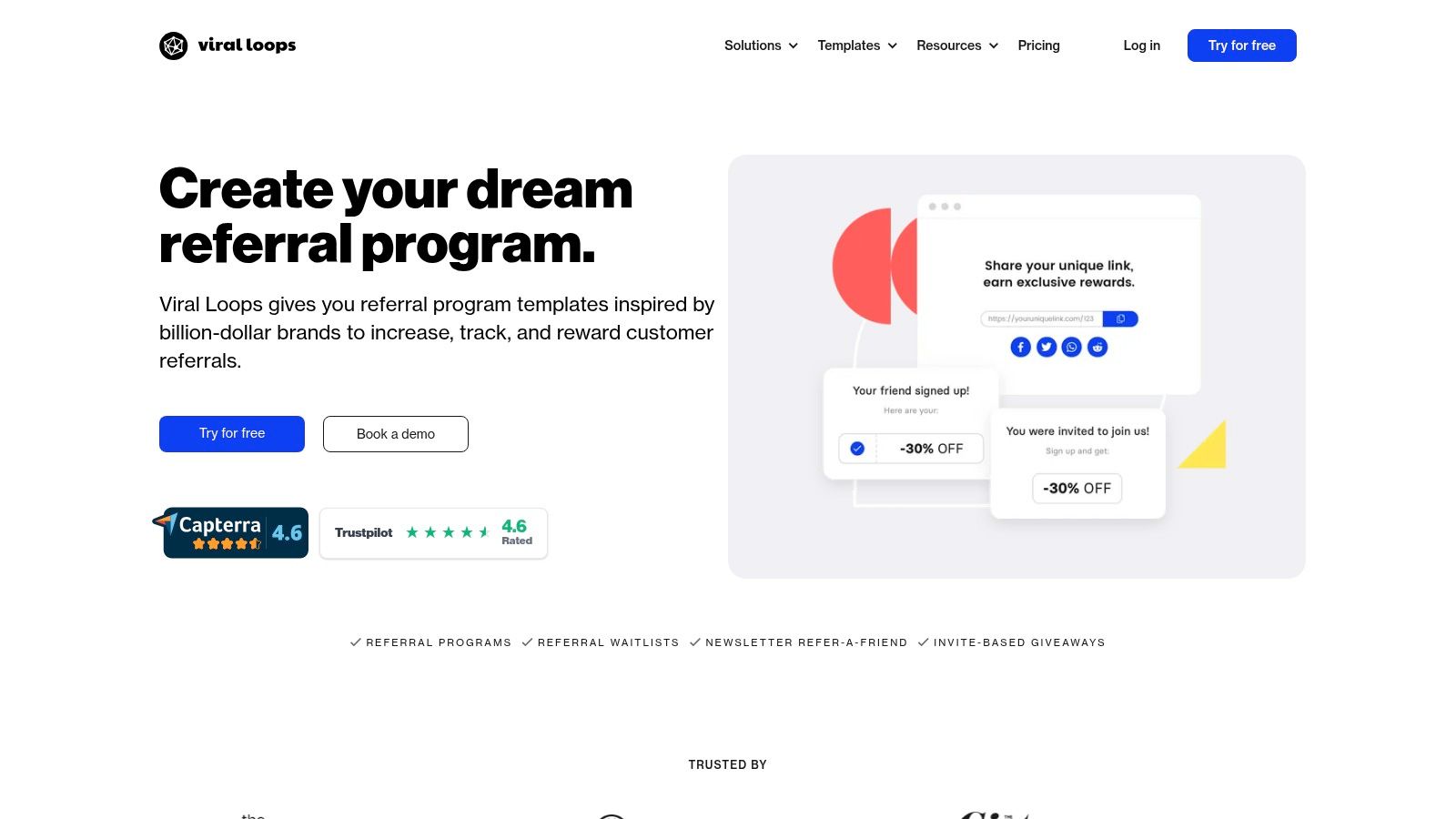
Unlike much of the best referral marketing software focused solely on post-purchase referrals, Viral Loops excels in pre-launch and list-building scenarios. It empowers brands to build an audience before a product even exists, rewarding users for sharing and moving up a waitlist. Its seamless integrations with tools like Shopify, Stripe, and Tremendous also ensure that reward fulfillment is automated, whether you're sending cash payouts or store credits.
Key Features and Pricing
Viral Loops uses a unique participant-based pricing model, where you pay based on the number of people engaged in your campaigns. This makes it highly predictable for budget planning and offers a clear path to scale as your campaigns grow. All plans come with a 14-day free trial that provides full access to its features.
- Best For: Startups, SaaS companies, and ecommerce stores running pre-launch campaigns or viral contests.
- Standout Feature: The template-driven campaign builder allows for rapid creation of sophisticated viral loops, such as milestone referrals inspired by Dropbox or viral giveaways.
- Pricing: Tiers are based on the number of participants. The entry-level "Start-up" plan is quite affordable, with higher tiers like "Growing" and "Power" unlocking more participants, advanced fraud controls, and API access.
Pros & Cons
- Pros: Affordable entry-level pricing, ideal for pre-launch marketing and growth experiments, easy template-driven setup for quick launches.
- Cons: Participant limits can cause frequent tier upgrades with fast growth, and advanced features and dedicated support are limited to top-tier plans.
Website: https://viral-loops.com
9. Referral Factory
Referral Factory distinguishes itself with a highly visual, no-code approach to building referral programs. It offers over 1,000 templates, allowing businesses to launch campaigns quickly using a drag-and-drop builder for referral widgets, pop-ups, and landing pages. This makes it an accessible choice for marketing teams that want to create custom-looking campaigns without relying on developers.
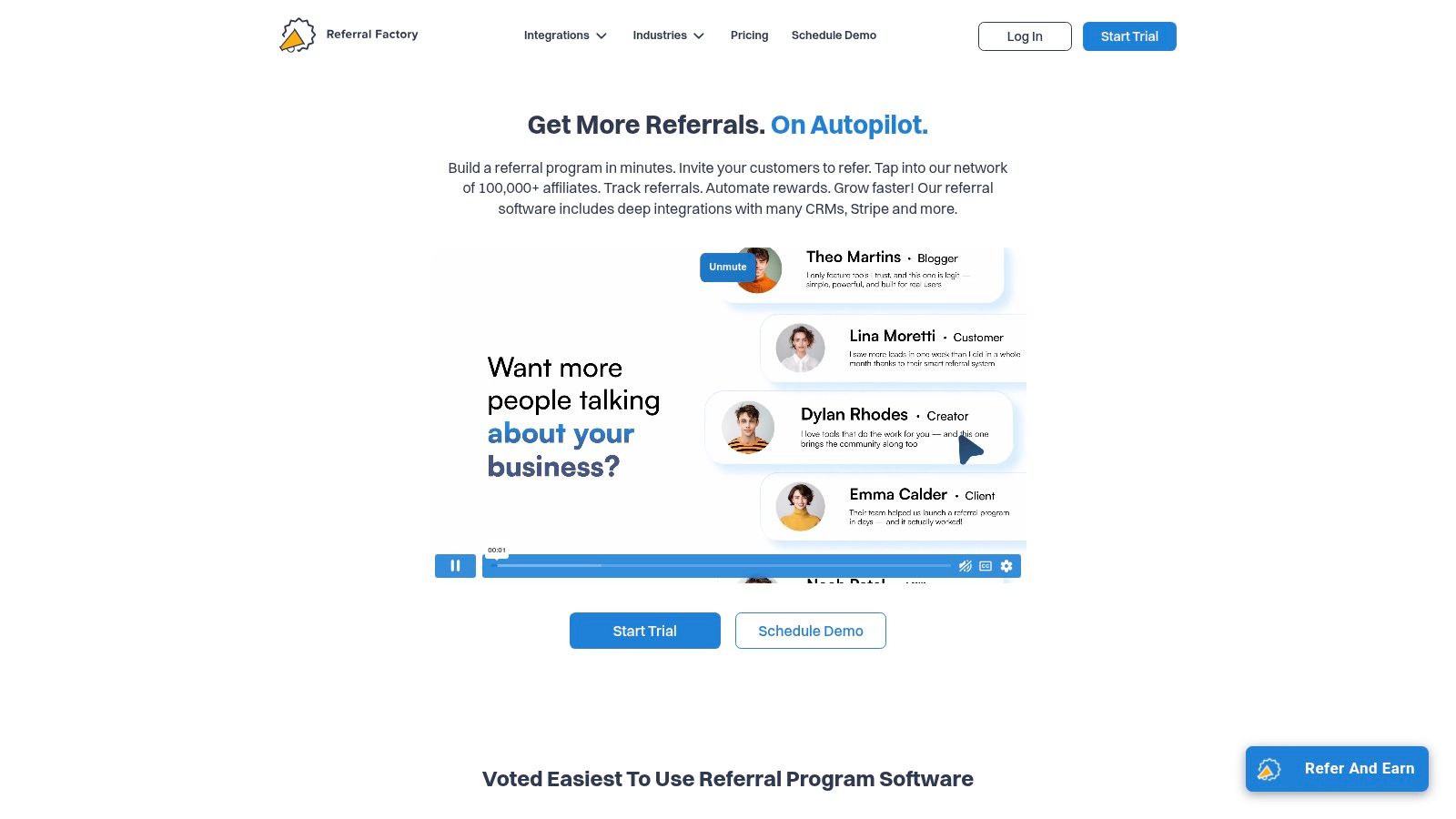
Unlike many platforms that focus on one type of reward, Referral Factory supports over 200 reward options, including cash, gift cards, and coupons, providing significant flexibility. Its integration capabilities are robust, offering webhook and API access, while higher-tier plans provide SSO and white-labeling. This makes it a strong contender for agencies or mid-market companies needing to fully brand their referral experience. It’s one of the best referral marketing software options for those who prioritize visual customization and reward variety.
Key Features and Pricing
Referral Factory’s pricing is tiered based on the number of users (advocates) you can have in your program. This user-centric model is straightforward and allows businesses to scale their investment as their referral community grows, with a generous 15-day free trial to get started.
- Best For: Mid-market brands and marketing agencies needing a white-label solution with a powerful visual campaign builder.
- Standout Feature: The drag-and-drop visual builder combined with 1,000+ templates allows for rapid deployment of highly customized referral campaigns.
- Pricing: Plans are priced based on the number of users. The "Starter" plan supports up to 2,500 users, "Pro" up to 25,000, and "Enterprise" offers unlimited users and advanced features like on-premise hosting.
Pros & Cons
- Pros: Generous user caps on mid-tier plans, excellent value for agencies wanting white-labeling, extensive reward options, and a straightforward free trial.
- Cons: Advanced customization and key features like SSO are reserved for higher-priced tiers, and the self-serve onboarding may require a demo for more complex integrations.
Website: https://referral-factory.com
10. Tapfiliate
Tapfiliate is a versatile affiliate and referral tracking software that excels in serving both ecommerce and SaaS companies. Its core strength is its flexibility in managing commissions and structuring programs, making it a robust tool for businesses with specific needs, such as recurring subscriptions or performance-based bonuses. The platform offers deep integrations and automation features that allow you to run complex programs with minimal manual oversight.
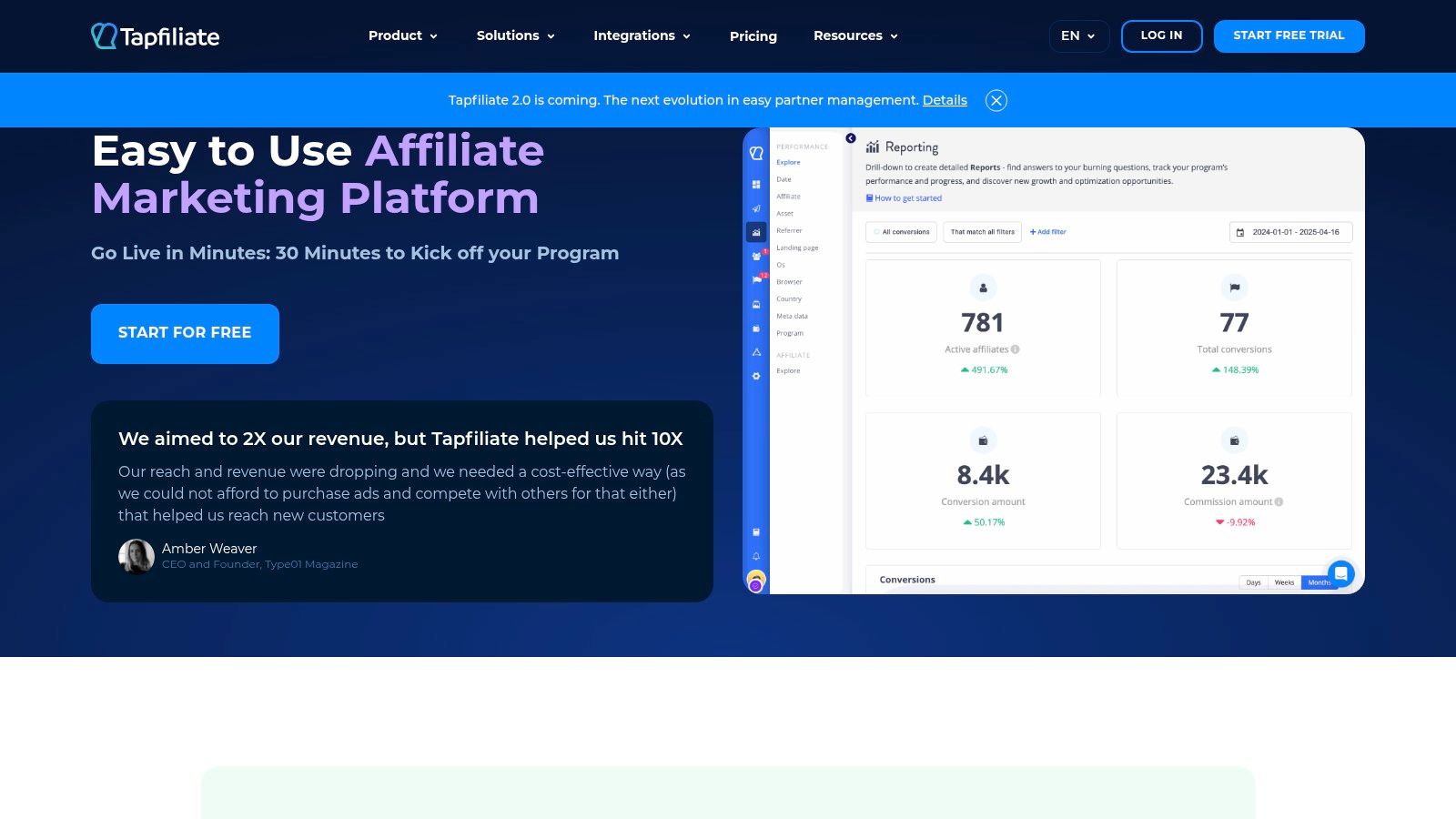
While many tools are built solely for simple customer-to-customer referrals, Tapfiliate is engineered to handle sophisticated affiliate networks alongside standard referral programs. It supports multi-level marketing (MLM) structures and allows you to create different commission groups, which is ideal for managing various types of partners like influencers, agencies, and customers. With over 30 integrations for platforms like Shopify, BigCommerce, and Stripe, it connects seamlessly into existing tech stacks.
Key Features and Pricing
Tapfiliate's pricing is tiered based on the number of clicks, conversions, and affiliates you track per month. All plans include core features like customizable commission structures and coupon tracking, with higher-tier plans unlocking more advanced capabilities. A 7 or 14-day free trial is available depending on the selected plan.
- Best For: SaaS and subscription-based businesses that need to manage recurring commissions and multiple partner types.
- Standout Feature: The powerful and flexible commission engine that supports recurring, lifetime, and performance-based rewards, making it one of the best referral marketing software options for subscription models.
- Pricing: Plans start with the Essential tier, scaling up to Pro and Enterprise based on tracking volume and feature needs like multi-level marketing and custom domain support.
Pros & Cons
- Pros: Powerful commission settings ideal for SaaS, scales effectively to large partner networks, and offers automated payouts via Trolley.
- Cons: The affiliate-centric dashboard can be overly complex for simple referral-only campaigns, and premium features like white-labeling are limited to expensive Enterprise plans.
Website: https://tapfiliate.com
11. Shopify App Store - Referral Apps category
For the millions of businesses built on Shopify, the best referral marketing software often lives right inside its ecosystem. The Shopify App Store's dedicated referral apps category serves as a one-stop-shop, eliminating the guesswork of finding a compatible solution. This central marketplace streamlines the entire discovery and implementation process, allowing merchants to compare top-rated apps, read user reviews, and install their chosen tool with a single click.
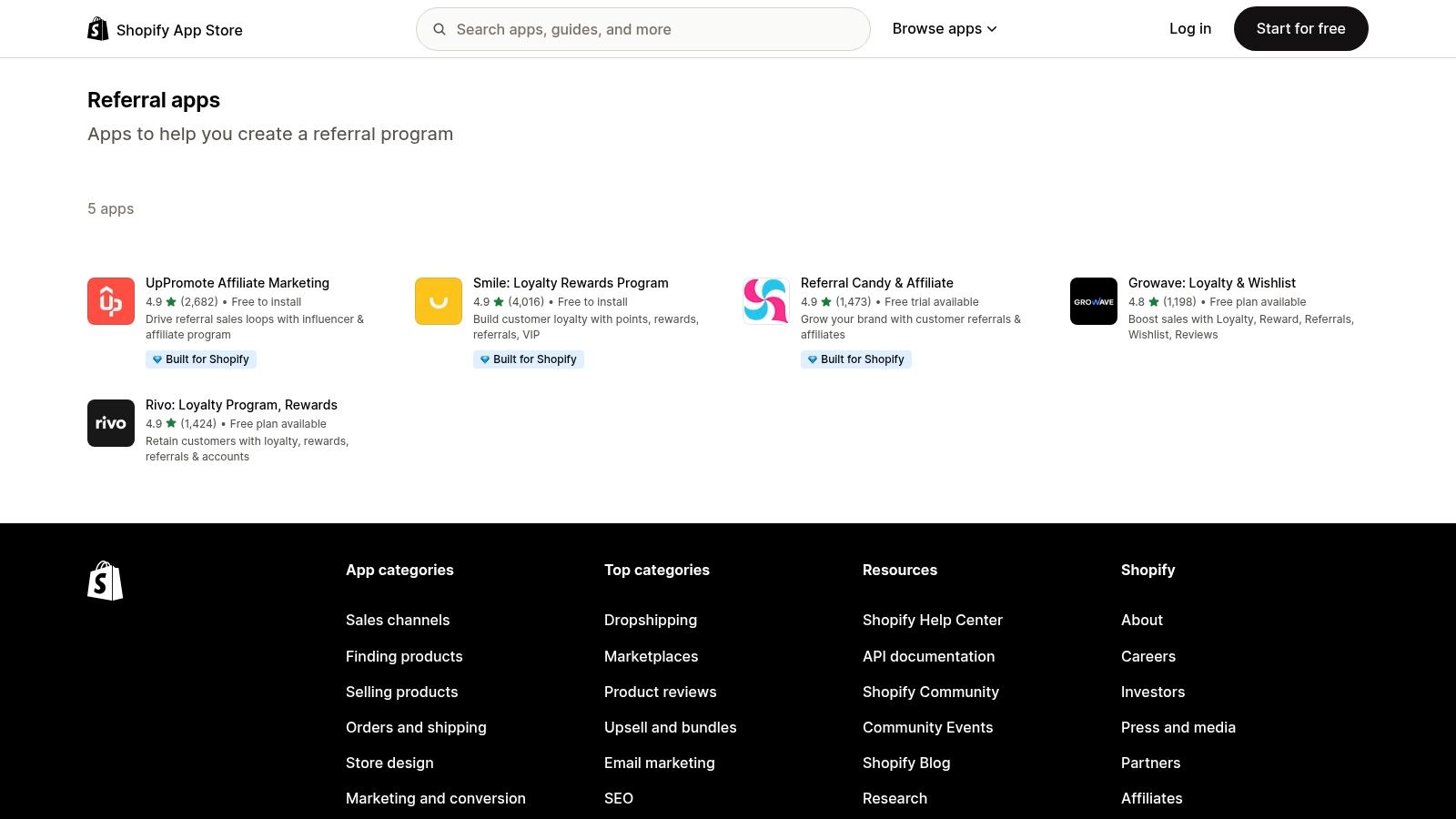
Unlike standalone platforms, apps found here are built specifically for Shopify, ensuring deep integration with its checkout, customer data, and order management systems. This curated environment includes heavyweights like ReferralCandy and Smile.io alongside niche solutions, all competing on features, usability, and price. The "Built for Shopify" badge offers an extra layer of confidence, indicating the app meets the platform's highest standards for performance, security, and user experience.
Key Features and Pricing
Pricing and features vary significantly from one app to another, but the App Store makes comparison simple. Each listing transparently displays pricing tiers, free trial availability, and detailed feature breakdowns, empowering merchants to make an informed decision without leaving their Shopify dashboard.
- Best For: Shopify merchants who want a seamless, fast, and reliable way to add referral marketing capabilities directly into their store.
- Standout Feature: The one-click installation and native integration remove technical barriers, making it incredibly easy to launch a program in minutes.
- Pricing: Varies by app. Many offer free plans for new stores, while others use a flat monthly fee, a commission-based model, or a combination of both.
Pros & Cons
- Pros: The fastest way to find and launch a referral program on Shopify, transparent user reviews and pricing, and a wide variety of vetted apps for different needs.
- Cons: The sheer number of options can be overwhelming, and app quality can vary, requiring careful due diligence from the merchant.
Website: https://apps.shopify.com/collections/referral-apps
12. G2 - Referral Software category
While not a software tool itself, G2's Referral Software category is an indispensable resource for anyone conducting due diligence. It functions as a meta-tool for market research, providing an aggregated, unbiased view of the landscape based on thousands of verified user reviews. This platform allows you to compare the best referral marketing software side-by-side, filter by company size or industry, and read detailed feedback from actual users.
Unlike vendor websites that present only their best features, G2 offers a transparent look at both strengths and weaknesses. The platform's Grid reports visually map out market leaders, contenders, and niche players, helping you quickly identify which solutions are gaining momentum and which are established performers. It's the ideal starting point for creating a shortlist of potential platforms to demo, saving you hours of independent research.
Key Features and Pricing
G2 is a free-to-use research platform. Pricing for the software listed on its pages is set by the individual vendors, though G2 often provides general pricing information and links to request quotes.
- Best For: Marketing teams and decision-makers in the initial research phase who need to compare multiple referral platforms and gather unbiased user feedback.
- Standout Feature: The "Grid" report and verified user reviews provide a powerful combination of quantitative and qualitative data for making informed purchasing decisions.
- Pricing: Free to browse and use for research. Software pricing varies by vendor.
Pros & Cons
- Pros: Access to thousands of verified user reviews, powerful filtering and comparison tools, surfaces related categories for a broader view, completely free to access.
- Cons: Some listed tools offer referral marketing as a minor feature within a larger suite, so you must verify the depth of the functionality. Pricing information can sometimes be outdated.
Website: https://www.g2.com/categories/referral
Top 12 Referral Marketing Software Comparison
Choosing the Right Referral Software to Fuel Your Growth
Navigating the crowded market of referral marketing software can feel overwhelming, but making an informed choice is the first step toward unlocking explosive growth. Throughout this guide, we've explored a wide range of platforms, from the straightforward simplicity of ReferralCandy to the enterprise-level power of Friendbuy and the specialized B2B capabilities of SaaSquatch. The central takeaway is clear: there is no single "best" platform for everyone. The best referral marketing software is the one that aligns perfectly with your unique business needs, technical resources, and strategic goals.
Your journey to finding the right tool begins with a clear internal assessment. An ecommerce brand on Shopify will prioritize seamless integration and user-friendly dashboards, making solutions from the Shopify App Store or a tool like ReferralCandy highly appealing. In contrast, a B2B SaaS company needs sophisticated tracking, tiered reward systems, and the ability to manage complex partner ecosystems, pushing them toward more robust platforms like Referral Rock or LinkJolt. Don't let a long feature list distract you from what truly matters for your business.
Key Factors to Guide Your Decision
Before you commit to a platform, take a moment to evaluate your specific requirements. This strategic pause will save you time and resources in the long run.
Consider these critical questions:
- What is your primary business model? B2B SaaS, B2C ecommerce, and subscription services all have different referral dynamics. Your chosen software must be built to handle your specific customer journey and sales cycle.
- How much technical skill do you have? Some platforms offer a near-plug-and-play experience, while others require developer involvement for deep customization. Be realistic about your team's capacity for implementation and ongoing management.
- What is your budget? Pricing models vary significantly, from flat monthly fees to revenue-sharing agreements and transaction-based costs. A solution like LinkJolt stands out by offering a powerful feature set without charging transaction fees, making it a highly scalable and predictable investment.
- What level of customization do you need? Do you need to fully brand every aspect of your referral program, or is a simple, effective template sufficient to get started? Enterprise solutions like Talkable excel at deep customization, while others focus on speed and simplicity.
Your Actionable Next Steps
Armed with the insights from this article, you are now ready to take decisive action. Don't get stuck in analysis paralysis. The goal is to move forward and start building your referral engine.
Follow this simple framework to make your final selection:
- Shortlist Your Top 3: Based on our reviews and your internal assessment, pick three platforms that seem like the best fit.
- Schedule Demos: There is no substitute for seeing the software in action. Book a live demo with each of your top contenders to ask specific questions related to your use case.
- Run a Trial: Whenever possible, sign up for a free trial. This is your opportunity to test the user interface, evaluate the setup process, and see if the platform feels intuitive for your team.
Choosing your referral marketing software is more than just a software purchase; it's an investment in a powerful, sustainable growth channel. The right tool will empower your happiest customers to become your most effective advocates, creating a virtuous cycle of acquisition that builds momentum over time. Select a partner that not only provides great technology but also supports your vision for growth.
Ready to launch a powerful referral program without sacrificing your revenue to transaction fees? See why B2B SaaS and subscription companies are choosing LinkJolt to build, automate, and scale their partnerships. Explore our features and start your free trial at LinkJolt today.
Ready to launch your affiliate program? Try LinkJolt free — 0% transaction fees, real-time tracking, and automated payouts starting at $19.99/month.
Further Reading
Watch Demo (2 min)


Trusted by 300+ SaaS companies
Start Your Affiliate Program Today
Get 30% off your first 3 months with code LINKJOLT30
✓ 3-day free trial
✓ Cancel anytime