Best platforms to sell digital products: A 2026 Guide to Top Options

Ollie Efez
February 09, 2026•21 min read•Updated Sep 14, 2026

Selling digital products, from ebooks and courses to software and design assets, offers incredible potential for scalable revenue. But the platform you choose can make or break your success. A great platform handles the technical complexities like payment processing, file delivery, and global sales tax, letting you focus on creating. The wrong one can eat into your profits with hidden fees or create a frustrating experience for your customers.
This guide breaks down the 12 best platforms to sell digital products, analyzing their strengths, weaknesses, and ideal use cases to help you make an informed decision. Whether you're a solo creator, a growing SaaS company, or an established enterprise, we provide a clear, comprehensive roundup.
We'll explore everything from simple storefronts like Gumroad and Payhip to powerful marketplaces like Envato and robust e-commerce solutions. To navigate the diverse options available, a detailed comparison of leading platforms can be incredibly insightful, and our Shopify vs WooCommerce vs BigCommerce Platform Guide offers a deep dive into those specific ecosystems.
Our goal is to help you find the perfect fit. Each entry includes detailed analysis on features, pricing, fraud controls, and integration support, along with screenshots and direct links to get you started. We've cut through the marketing fluff to give you practical insights and honest assessments, ensuring you find the right tool to build and scale your digital business effectively. Let's find the platform that will work best for you.
1. Gumroad
Gumroad is a streamlined, creator-first platform designed for selling digital products with minimal setup. It's one of the best platforms to sell digital products for creators who want to launch quickly without building a full website. You can sell everything from ebooks and music to software licenses and memberships through simple, shareable links or a public profile page.
What makes Gumroad stand out is its role as a Merchant of Record (MoR). This means it handles the complexities of global sales tax and VAT on your behalf, a significant administrative relief for solo creators and small businesses. Its simplicity is its core strength; you can have a product live and ready to sell in minutes.
Key Details & Features
Pros & Cons
- Pros: Extremely fast and easy to set up. The MoR function removes a major headache for international sales. No monthly fees make it accessible for beginners.
- Cons: The 10% transaction fee is higher than many competitors, which can be costly at scale. Customization options for storefronts are very limited.
Website: https://gumroad.com/pricing
2. Lemon Squeezy
Lemon Squeezy is a modern e-commerce platform built specifically for selling digital products, SaaS subscriptions, and software licenses. It stands out by acting as your Merchant of Record (MoR), which means it handles the complex and often frustrating process of global sales tax and VAT compliance for you. This makes it an excellent choice for businesses and creators who want to sell internationally without becoming tax experts.

The platform is more than just a payment processor; it offers a suite of tools designed to help you grow. These include built-in subscription billing, fraud prevention, and even email marketing capabilities. For SaaS startups and established software companies, Lemon Squeezy is one of the best platforms to sell digital products because it consolidates many essential business functions into a single, user-friendly interface, simplifying your tech stack.
Key Details & Features
Pros & Cons
- Pros: The MoR model is a massive advantage for global sales compliance. Offers an all-in-one toolkit including subscriptions and fraud protection. No monthly fees provide a low-risk entry point.
- Cons: The per-transaction fees, while competitive, can become costly for businesses with very high sales volume. Some edge cases or additional services may incur extra fees.
Website: https://www.lemonsqueezy.com/pricing?utmsource=openai
3. Payhip
Payhip is a versatile, all-in-one e-commerce platform that makes it easy to sell digital downloads, online courses, and memberships. It provides a simple storefront builder and handles the entire sales process, from payment processing to instant file delivery, making it one of the best platforms to sell digital products for creators seeking a comprehensive but straightforward solution.
What sets Payhip apart is its transparent pricing and full feature access across all plans, including the free tier. It also automatically handles EU and UK VAT, a critical feature for creators with a global audience. This removes a significant administrative burden and allows sellers to focus on creating and marketing their products without worrying about complex international tax rules.
Key Details & Features
Pros & Cons
- Pros: All features are available across every plan, providing transparent value. The option to eliminate platform fees on higher tiers is great for scaling businesses. Built-in EU/UK VAT handling is a major plus.
- Cons: Standard Stripe and PayPal processing fees still apply on all plans. The storefront builder is less customizable and extensible than a full CMS-based store.
Website: https://payhip.com/pricing
4. Sellfy
Sellfy is an all-in-one e-commerce platform designed for creators looking to sell digital products, physical goods, and even print-on-demand merchandise from a single storefront. It stands out as one of the best platforms to sell digital products for those who want a simple, clean, and quick setup without needing a separate website builder. You can sell everything from ebooks and video courses to subscriptions and digital art with ease.
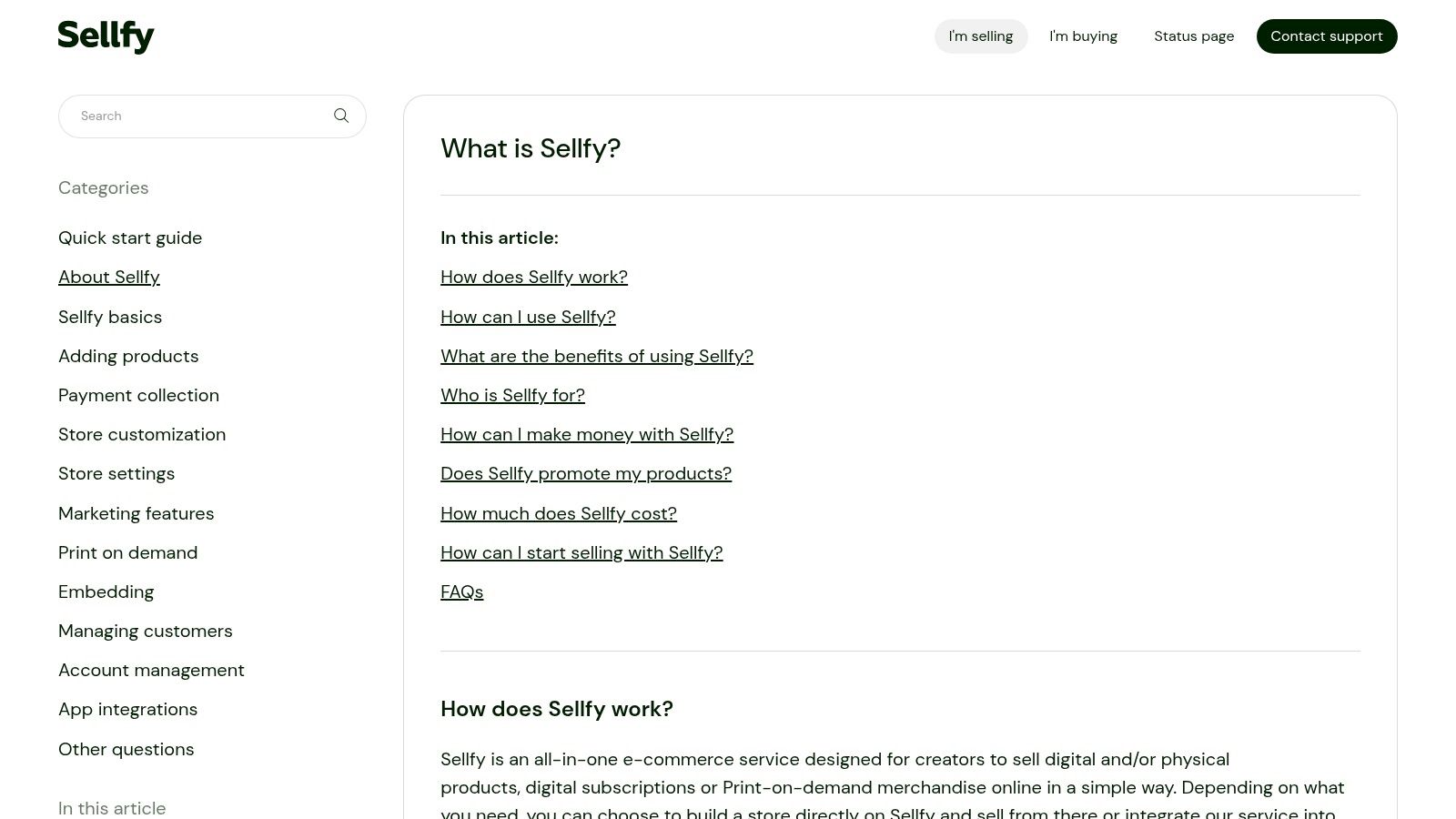
What makes Sellfy particularly attractive is its focus on simplicity and built-in marketing features on paid plans. Unlike more complex platforms, Sellfy offers a straightforward dashboard where you can upload unlimited products, connect your Stripe or PayPal account, and start selling in minutes. Higher-tier plans include valuable tools like email marketing, cart abandonment notifications, and upselling features to help you maximize revenue without relying on third-party apps.
Key Details & Features
Pros & Cons
- Pros: 0% transaction fees on all paid plans, so you only pay standard payment processor fees. The interface is extremely user-friendly and fast to set up. Built-in print-on-demand is a great bonus.
- Cons: There is no free plan available, only a 14-day trial. It has fewer advanced features and third-party integrations compared to larger e-commerce platforms like Shopify.
Website: https://sellfy.com/
5. Shopify (with Digital Downloads app)
Shopify is a powerhouse e-commerce platform known for physical goods, but it's also one of the best platforms to sell digital products when combined with its free "Digital Downloads" app. This setup allows you to leverage Shopify’s robust store customization, extensive marketing integrations, and powerful analytics while managing digital files like ebooks, software, or course materials. It provides a full-fledged storefront, not just a simple checkout page.
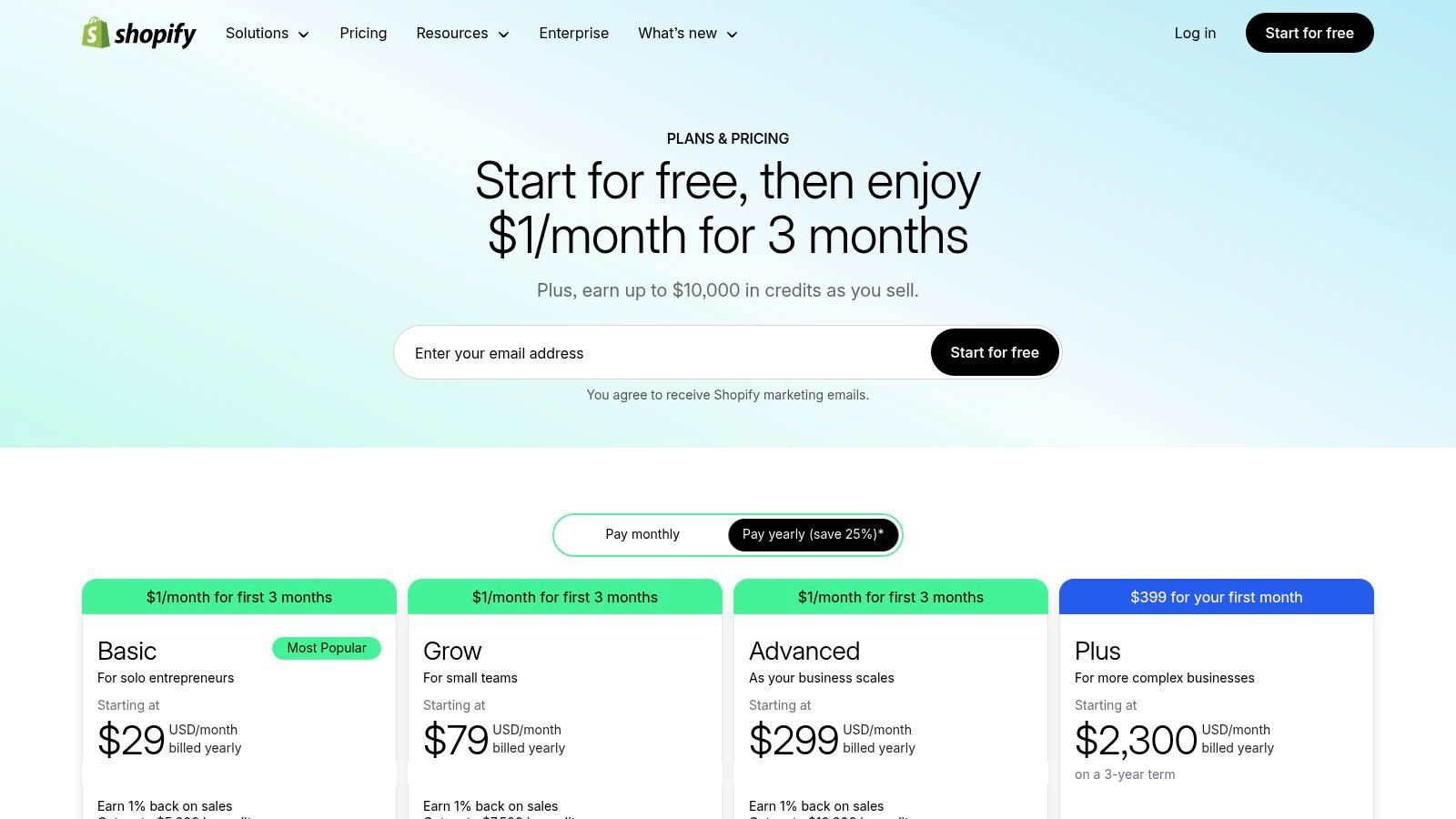
What makes Shopify stand out is its scalability and mature ecosystem. You get access to thousands of third-party apps for everything from email marketing to advanced analytics. It’s an ideal solution for businesses that sell both physical and digital goods or plan to scale significantly. Many of these apps also help with marketing, and if you're looking to grow with partners, you can explore how to start an affiliate program that integrates directly with your store.
Key Details & Features
Pros & Cons
- Pros: Highly customizable storefronts and a massive app ecosystem. Excellent for brands that plan to scale or sell mixed inventory. Strong marketing and analytics tools are built-in.
- Cons: Monthly subscription fees can be costly for new sellers. The free Digital Downloads app has limitations and mixed user reviews; more robust digital delivery often requires a paid third-party app.
Website: https://www.shopify.com/pricing?utmsource=openai
6. WooCommerce (WordPress)
WooCommerce is an open-source, free WordPress plugin that transforms your website into a powerful, self-hosted online store. For those who want complete control over their brand and data, it is one of the best platforms to sell digital products. It natively supports virtual and downloadable products, allowing you to sell anything from software and ebooks to online courses with configurable delivery and access controls.
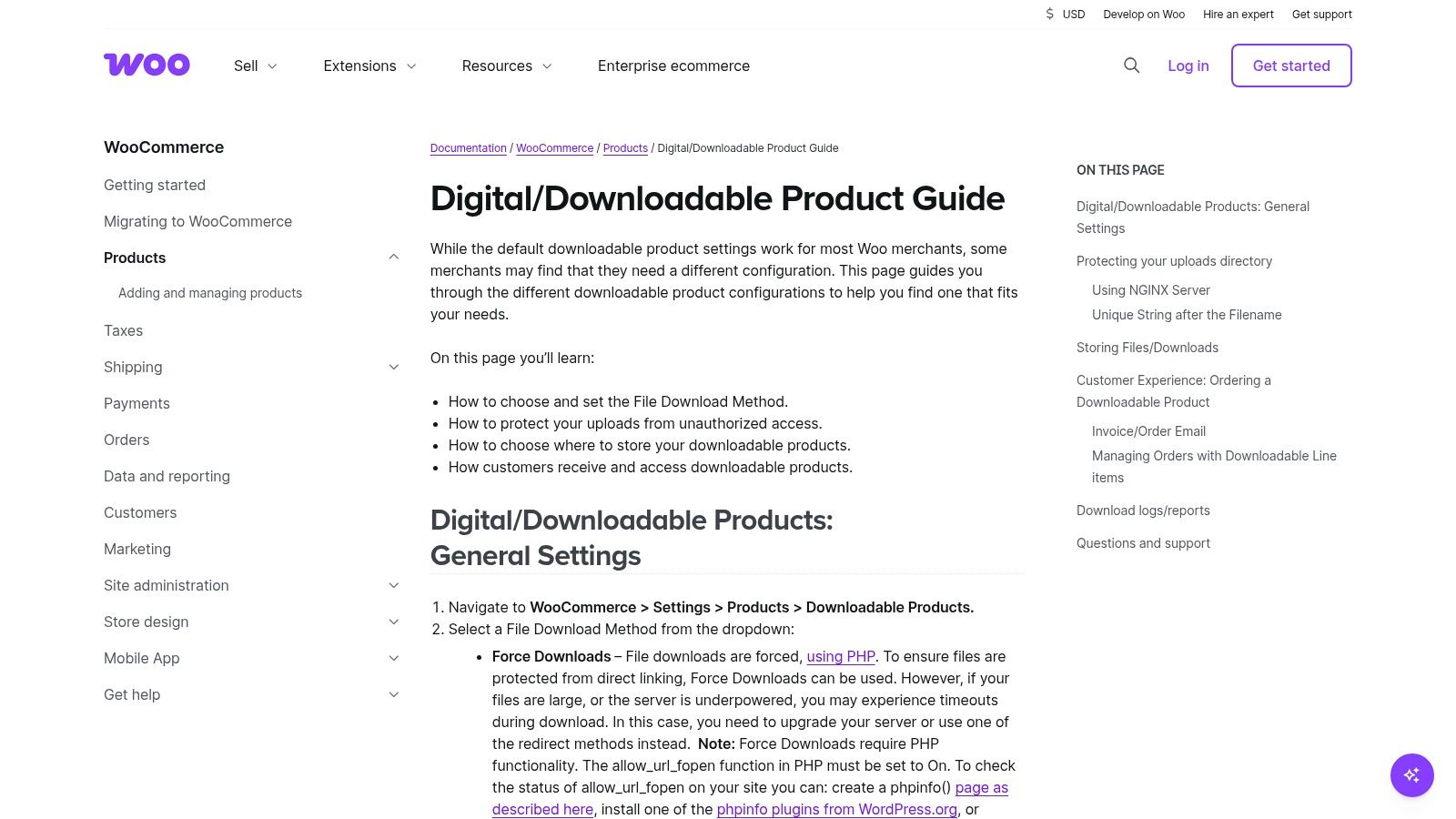
What makes WooCommerce stand out is its unparalleled extensibility and ownership. Because you self-host your store, you control every aspect, from the domain name to the customer experience. The platform integrates with countless payment gateways, including its own WooPayments, and its vast library of free and paid extensions allows you to add nearly any functionality imaginable, from subscriptions to affiliate programs.
Key Details & Features
Pros & Cons
- Pros: Total ownership of your site and data. No platform fees, only operational costs. Highly extensible and scalable.
- Cons: Requires you to manage hosting, security, and updates. The total cost of ownership can vary widely depending on hosting and chosen extensions.
Website: https://woocommerce.com/document/digital-downloadable-product-handling/?utmsource=openai
7. Etsy (Digital Downloads)
While known for handmade physical goods, Etsy is a powerhouse marketplace and one of the best platforms to sell digital products, especially for creative niches. It allows creators to list instant-download files like art prints, social media templates, digital planners, and patterns, tapping into a massive, built-in audience actively searching for unique digital items.
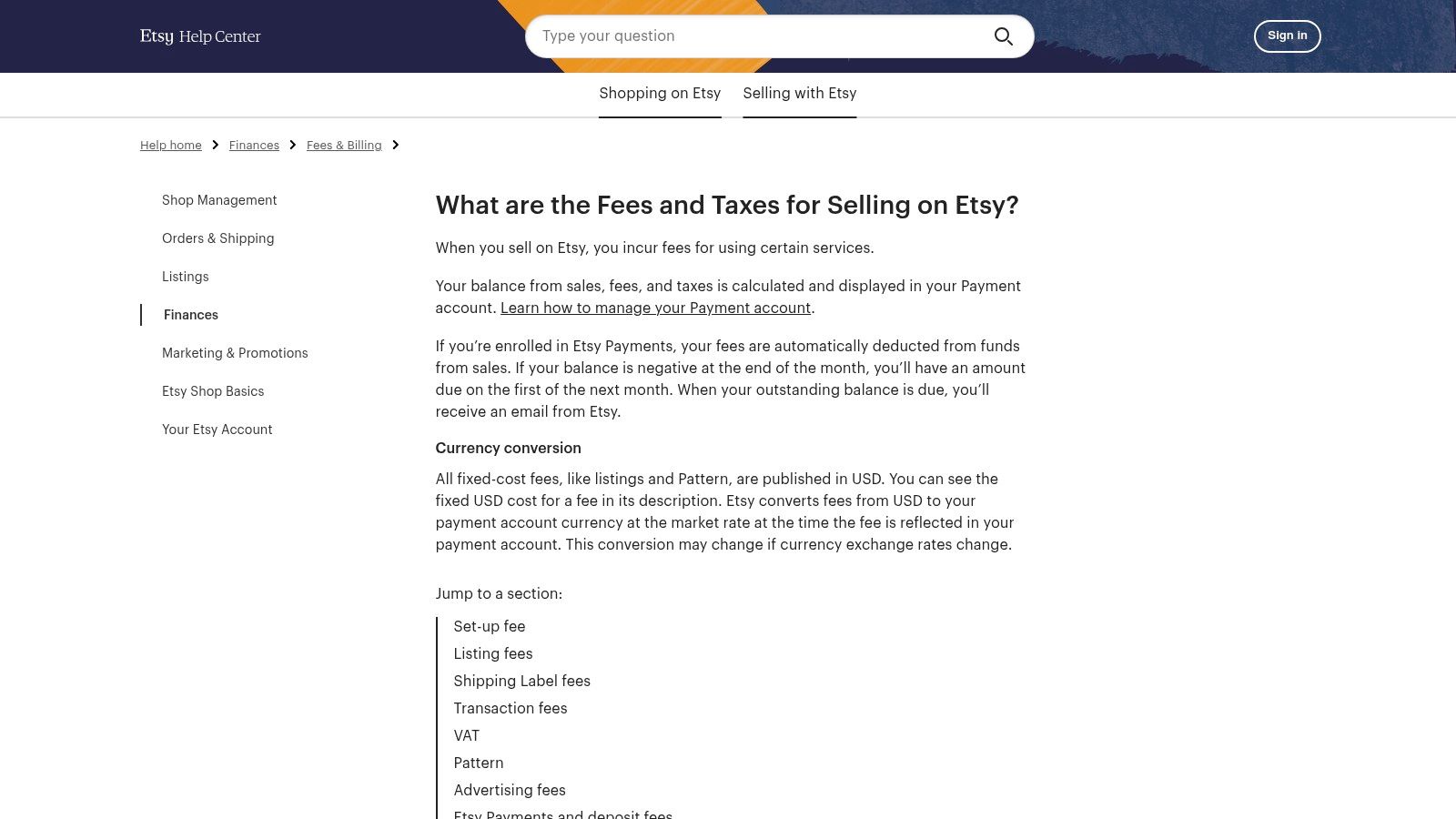
What makes Etsy unique is its discovery engine. Unlike a standalone website where you must generate all your own traffic, Etsy's marketplace puts your products in front of millions of buyers. This makes it an ideal platform for testing product ideas with minimal upfront cost and risk before committing to a dedicated platform. The listing process is simple, and sales are delivered automatically to the buyer.
Key Details & Features
Pros & Cons
- Pros: Huge existing audience for creative and niche digital goods. Low upfront cost makes it easy to test product-market fit. Trusted brand name can increase buyer confidence.
- Cons: The fee structure is complex and can add up significantly (listing, transaction, processing, ads). Competition is intense, and you're subject to the marketplace's algorithm and rules. While Etsy has an affiliate program, you have less control than if you managed your own; to learn more about the topic, you can read our guide on what is affiliate marketing.
Website: https://help.etsy.com/hc/en-us/articles/115014483627
8. Creative Market
Creative Market is a curated marketplace specifically built for designers to sell high-quality digital assets like fonts, graphics, website themes, and templates. Unlike general-purpose platforms, it connects creators directly with a large, built-in audience of buyers actively searching for professional design resources, making it one of the best platforms to sell digital products in the creative niche. You open a shop, and the platform handles hosting, payment processing, and customer discovery.
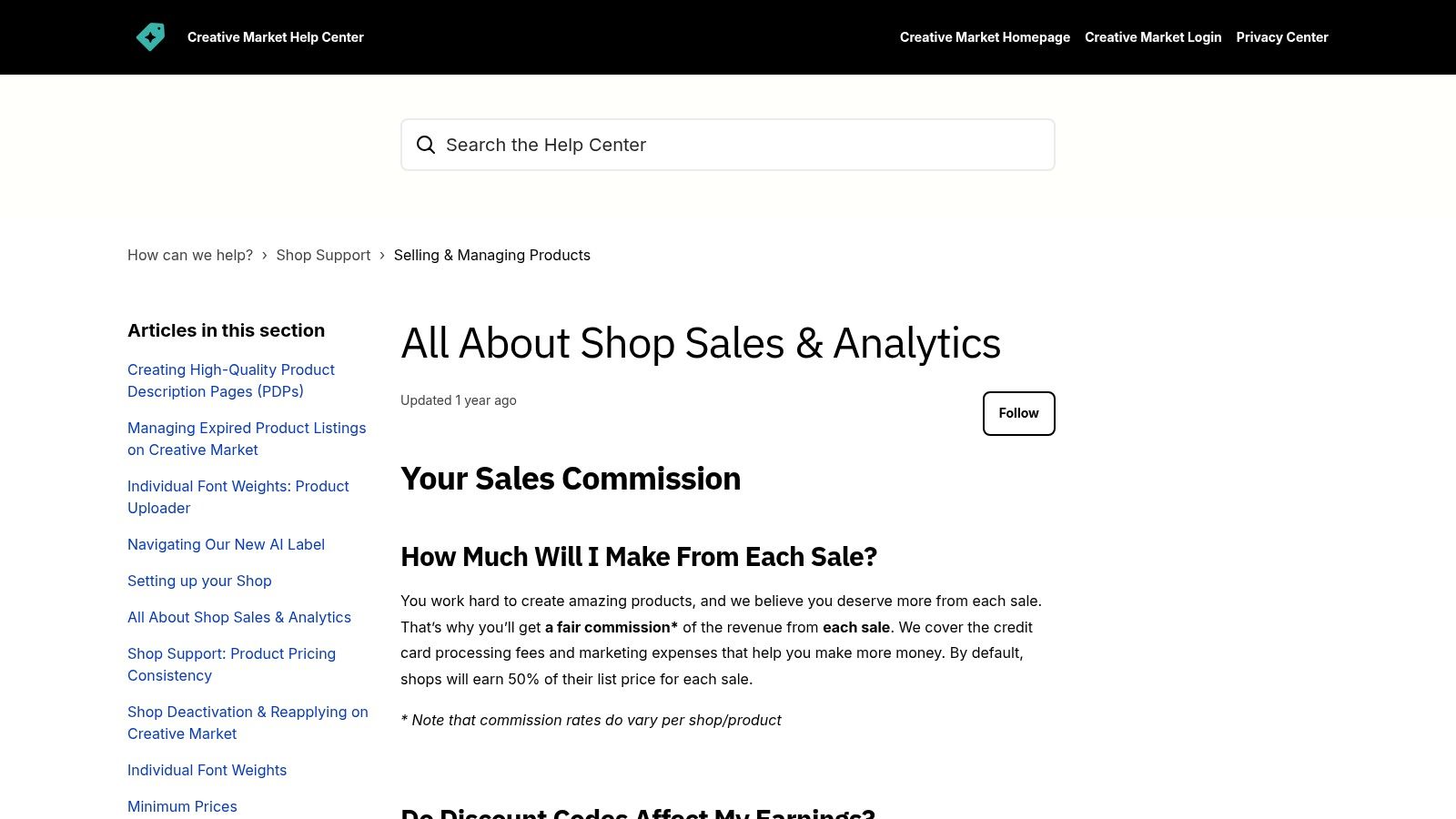
What makes Creative Market unique is its focus on quality and community curation. Getting a shop approved requires a portfolio review, ensuring a high standard across the marketplace. This exclusivity benefits sellers by attracting serious buyers willing to pay for premium assets. The platform also provides pricing guidance and detailed shop analytics, helping creators optimize their listings and understand their customer base without needing external tools.
Key Details & Features
Pros & Cons
- Pros: Access to a large, targeted audience of design professionals. Platform-managed marketing and discovery features. Minimum price guidance helps creators value their work.
- Cons: The 50% commission is significantly higher than most other platforms. A shop application process means not everyone is accepted.
Website: https://support.creativemarket.com/hc/en-us/articles/201193714-All-About-Shop-Sales-Analytics
9. Envato Market (ThemeForest, CodeCanyon, etc.)
Envato Market is a massive network of specialized marketplaces for creative assets, making it one of the best platforms to sell digital products like website themes, plugins, video templates, and graphics. Unlike standalone platforms, Envato gives authors access to a huge, built-in audience actively searching for specific assets on marketplaces like ThemeForest (for WordPress themes) and CodeCanyon (for code and plugins).
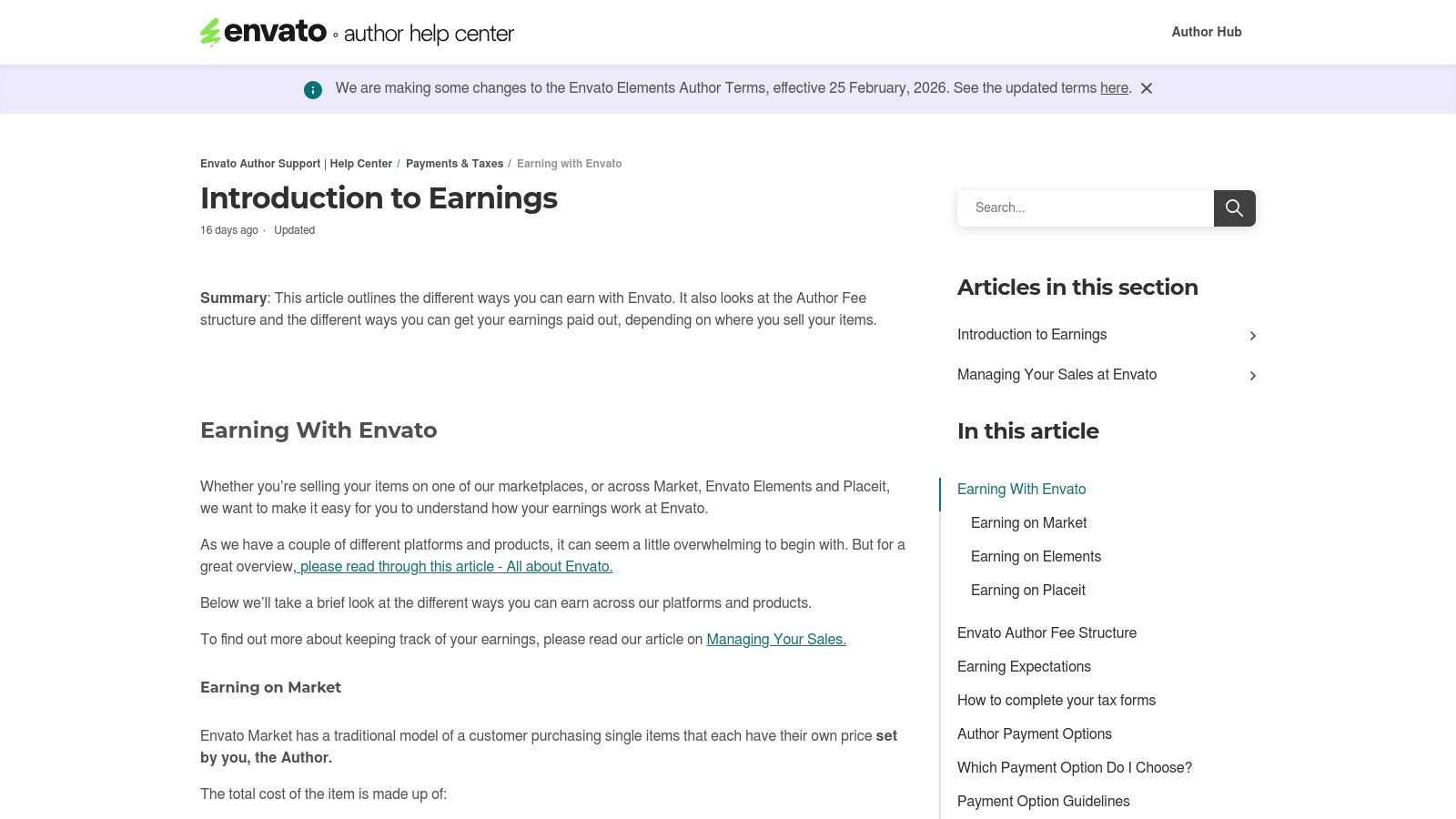
The platform is designed for professional creators who want to tap into an existing customer base rather than build one from scratch. Authors set their own prices and can choose to sell their items exclusively on Envato, which results in a much lower fee structure. This model rewards high-quality, dedicated creators who can produce assets that meet the marketplace's standards and buyer demands.
Key Details & Features
Pros & Cons
- Pros: Enormous buyer traffic and deep demand for popular assets like themes and plugins. Scalable earnings potential for exclusive authors with high sales volume.
- Cons: The author fee structure is complex and can be very high for non-exclusive authors. The platform has temporarily paused new author sign-ups, with plans for selective reopening, making access difficult for newcomers.
Website: https://help.author.envato.com/hc/en-us/articles/360000472943-Envato-Author-Fee-Schedule
10. itch.io
itch.io is a popular open marketplace primarily known for independent video games, but it also serves as a fantastic platform for selling related digital products. Creators can sell game assets, development tools, soundtracks, comics, and ebooks on customizable pages, making it a versatile choice for anyone in the creative or gaming space.
What truly sets itch.io apart is its creator-first revenue model. The platform operates on an "open revenue sharing" system where you, the creator, decide what percentage of your sales goes to the platform. The default is 10%, but you can set it to anything, including 0%. This flexibility, combined with its built-in community and tools for sales events and bundles, makes it one of the best platforms to sell digital products with minimal financial risk.
Key Details & Features
Pros & Cons
- Pros: Extremely creator-friendly pricing model. Strong community and discovery features like game jams and bundles. Flexible storefronts and "pay-what-you-want" pricing options for products.
- Cons: The audience is heavily skewed towards indie games, so non-gaming digital goods may see less traffic. Platform design is functional but less polished than competitors.
Website: https://itch.io/docs/creators/payments
11. Podia
Podia is an all-in-one platform designed for creators who want to sell digital products, online courses, and memberships without juggling multiple tools. It's one of the best platforms to sell digital products for educators and coaches who need a website, checkout, and built-in email marketing stack in one clean package. The platform excels at simplifying the process of building an online business from the ground up.
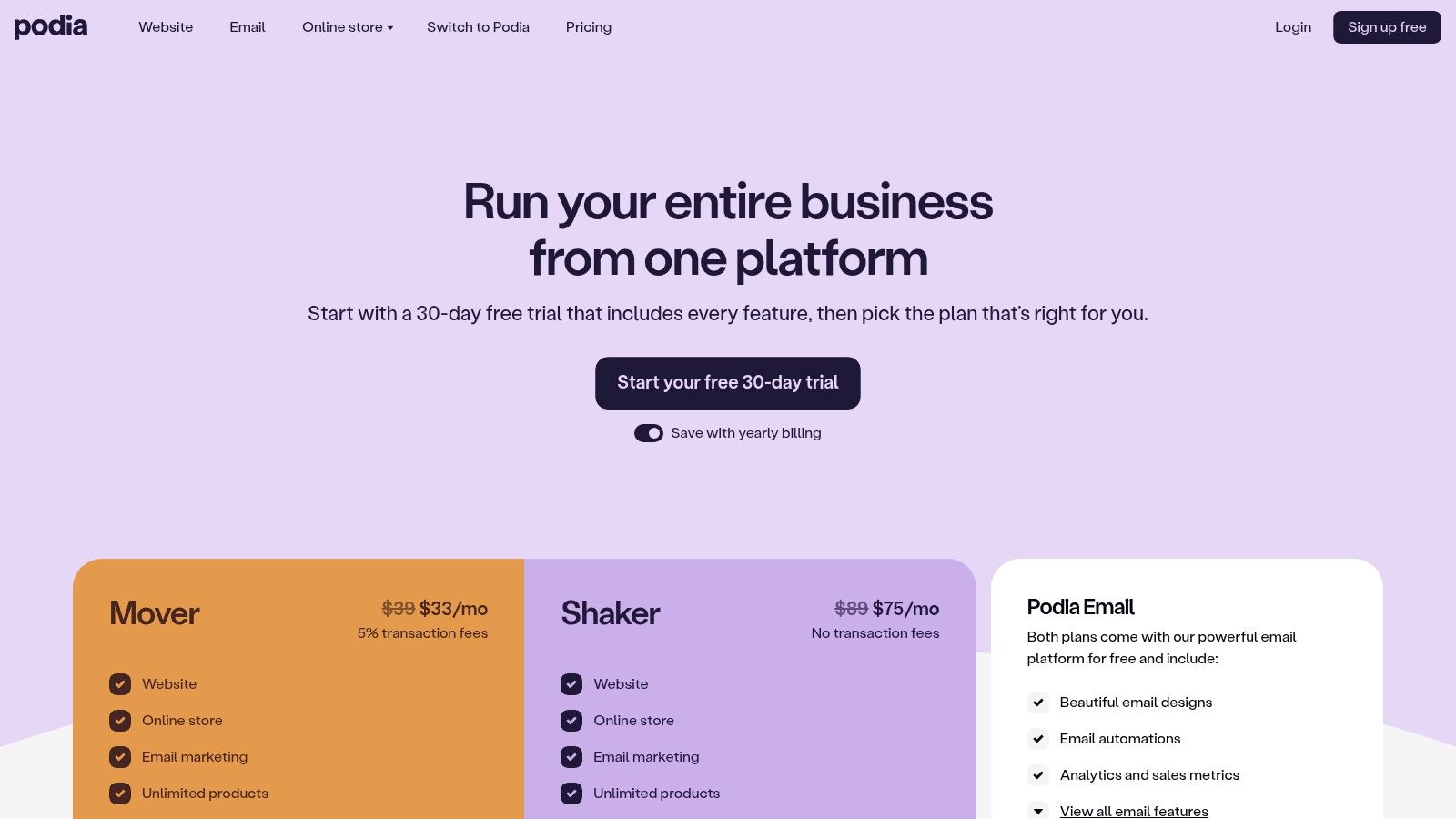
What makes Podia a compelling choice is its unified approach. Instead of piecing together a website builder, an email service, and a course platform, Podia integrates these functions seamlessly. This helps you focus on creating and selling rather than on technical setup. Their clear pricing tiers and generous free plan provide a low-risk entry point for new creators, making it easy to start and scale. For those just starting out, learning how to monetize content effectively is key, and Podia simplifies this learning curve.
Key Details & Features
Pros & Cons
- Pros: Very quick to launch a simple site and checkout. Unlimited products on all plans. Clear plan differentiation allows you to choose between higher fees or a subscription cost.
- Cons: Fewer deep course features than specialized Learning Management System (LMS) platforms. Built-in affiliate marketing tools are limited to higher-tier plans.
Website: https://www.podia.com/articles/introducing-podias-free-plan?utmsource=openai
12. Teachable
Teachable is an all-in-one platform built for educators and creators who want to build and sell online courses and coaching services. It's one of the best platforms to sell digital products for those who prioritize a structured learning experience, offering robust course-building tools, student management, and marketing features in a single package. The platform provides a native checkout, affiliate capabilities, and even dedicated mobile apps for students.
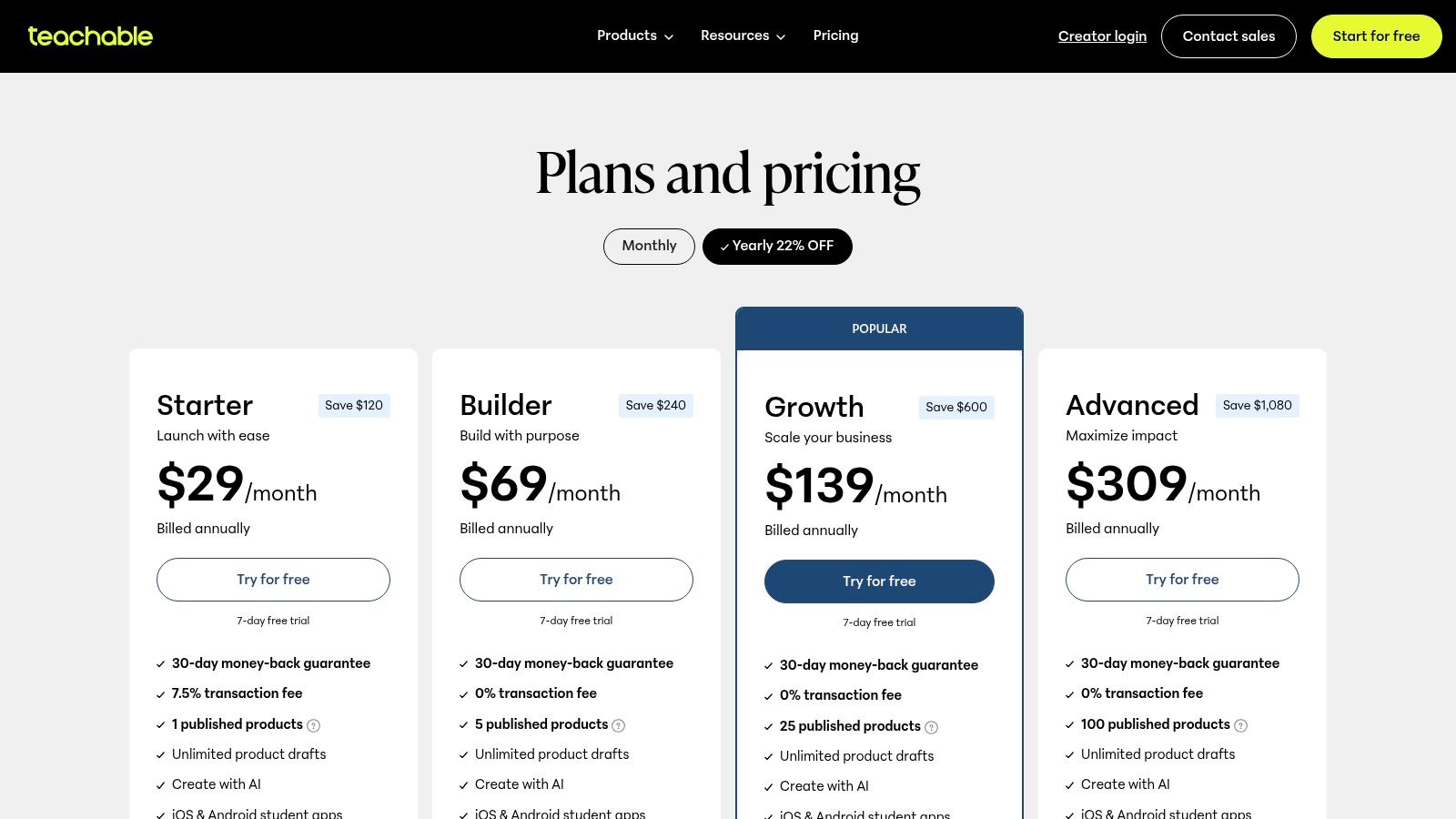
What makes Teachable a strong contender is its focus on the end-to-end student journey. Features like course completion certificates, quizzes, and a polished mobile app experience help creators deliver a professional educational product. Furthermore, its integrated payment solution, teachable:pay, handles global payments and tax compliance, simplifying the financial side of running an online school.
Key Details & Features
Pros & Cons
- Pros: Strong student experience with dedicated mobile apps. Zero platform transaction fees on Builder tier and above. Built-in marketing tools like affiliates and upsells.
- Cons: The Starter plan carries a 7.5% transaction fee on top of the monthly cost. Higher-tier plans can become costly if you are selling many different low-priced products.
Website: https://www.teachable.com/pricing?utmsource=openai
Top 12 Platforms to Sell Digital Products — Quick Comparison
Making Your Final Choice and Scaling with Affiliate Marketing
Navigating the crowded landscape of tools for selling digital products can feel overwhelming, but making the right choice boils down to aligning a platform's strengths with your specific business goals. We've explored a dozen of the best platforms to sell digital products, from all-in-one creator platforms like Gumroad and Podia to powerful e-commerce giants like Shopify and customizable solutions like WooCommerce. The ideal platform isn't a one-size-fits-all solution; it’s the one that best fits you.
Your final decision hinges on a few critical questions. Are you a solo creator who values simplicity and speed above all else? Then Gumroad, Payhip, or Lemon Squeezy offer a direct path to market with minimal technical fuss. Do you need a platform that can handle complex sales tax and VAT compliance for you? Lemon Squeezy is purpose-built for this, making it a standout choice for SaaS and global sellers.
Conversely, if your priority is building a unique brand experience with complete control over design and functionality, a self-hosted option like WooCommerce is unmatched. For those with an existing WordPress site, it's the most powerful and scalable choice. And for businesses looking to build a comprehensive online store with both digital and physical goods, Shopify provides a robust, all-in-one ecosystem.
Key Takeaways for Platform Selection
To simplify your choice, consider these final points:
- For Beginners & Creators: If you're just starting and want to validate an idea quickly, prioritize platforms with low barriers to entry and simple interfaces. Gumroad and Payhip are excellent for getting your first product live in minutes.
- For SaaS & Software Sellers: Your needs are more complex, often involving licensing, subscriptions, and global tax management. Lemon Squeezy is the clear winner here, acting as a Merchant of Record to handle these burdens for you.
- For Maximum Control & Customization: If you want to own your platform and tailor every aspect of the user experience, WooCommerce on a WordPress site offers limitless potential. This is the best long-term choice for serious brand builders.
- For Leveraging Existing Audiences: If you don't have a following, marketplaces like Etsy, Creative Market, and Envato can provide immediate visibility. Be prepared for higher fees and intense competition, which are the primary trade-offs for their built-in traffic.
Beyond the Platform: Your Strategy for Growth
Choosing your platform is just the first step. True success comes from effective marketing and a clear strategy to drive sales. Regardless of the platform you select, your product page or storefront is your digital salesperson. As you refine your strategy for selling digital products, learning how to create a landing page that converts quickly is crucial for scaling your efforts.
One of the most powerful and scalable growth levers is affiliate marketing. By empowering creators, influencers, and even your own customers to promote your products, you create a performance-based sales force that only gets paid when they deliver results. This turns your marketing from a cost center into a predictable revenue driver.
While some platforms on our list have basic, built-in affiliate tools, they often lack the sophisticated features needed to run a truly effective program. This is where a dedicated affiliate management tool becomes essential. By integrating a solution like LinkJolt with your chosen platform, you can unlock advanced capabilities like tiered commissions, automated payouts, and in-depth analytics. This allows you to focus on creating amazing digital products while your network of affiliates expands your reach and drives consistent sales. Your chosen platform is the engine, but a strong affiliate program is the fuel for exponential growth.
Ready to scale your digital product sales with a powerful, automated affiliate program? LinkJolt integrates seamlessly with Stripe, Paddle, Polar, and Shopify to help you build, manage, and grow your partnerships. Start your free trial and see how easy it is to turn your biggest fans into your best marketers.
Watch Demo (2 min)


Trusted by 300+ SaaS companies
Start Your Affiliate Program Today
Get 30% off your first 3 months with code LINKJOLT30
✓ 7-day free trial
✓ Cancel anytime