How to Hire a Great Affiliate Program Manager
How to Hire a Great Affiliate Program Manager

Ollie Efez
December 05, 2025•17 min read

So, what exactly is an affiliate program manager? Think of them less as an administrator and more as the architect of your entire partnership channel. They're the one on the ground recruiting top-tier partners, launching campaigns that actually convert, and building relationships that drive consistent revenue.
This role is what turns a simple affiliate link on a partner's site into a genuine high-growth engine for your business.
Why Your SaaS Needs an Affiliate Program Manager
In the crowded SaaS marketplace, you can't just rely on paid ads and SEO anymore. A well-run affiliate program gives you a scalable, performance-based way to find new customers. But here's the catch: without someone dedicated to leading the charge, most programs fizzle out. They become a messy list of links instead of the strategic asset they should be.
An affiliate program manager is like a great coach for a sports team. You can have a roster full of talented players, but without a coach, there’s no strategy, no direction, and no motivation. The coach finds the right talent, draws up the plays, and gets everyone fired up to win. That's exactly what an affiliate manager does—they turn a random group of partners into a unified, revenue-generating team.
Moving Beyond Passive Partnerships
One of the biggest mistakes companies make is treating affiliate marketing as a "set it and forget it" channel. That passive approach almost never works. A great manager is proactive, constantly building and scaling the program by focusing on a few key areas that deliver real growth.
Their job boils down to these core functions:
- Strategic Recruitment: They don't just sit back and approve anyone who applies. They actively hunt for high-value affiliates—from influential bloggers in your niche to other tech companies that complement your product.
- Relationship Nurturing: Strong, personal relationships are everything. A manager makes sure partners have the support, creative assets, and performance feedback they need to stay engaged and motivated.
- Performance Optimization: They live in the data, figuring out what's working and what's not. This means tweaking commission structures, tracking key metrics, and designing campaigns that boost conversions for everyone involved.
- Fraud Prevention: A good manager is also your program's security guard. They put systems in place to spot and block fake clicks and sign-ups, making sure your marketing budget is spent on real results.
A dedicated affiliate program manager bridges the gap between your marketing efforts and actual sales. They aren't an expense; they're an investment in scalable, long-term revenue that pays for itself many times over.
Ultimately, hiring an affiliate program manager elevates your program from a background task to a powerful, proactive growth channel. Their expertise ensures your partnerships aren't just ticking along—they're actively contributing to your bottom line, day in and day out.
The Core Responsibilities of This Role
Think of an affiliate program manager as more than just an administrator; they're the strategic mastermind behind your entire partnership channel. Their job is a blend of relationship building, deep data analysis, and creative marketing, all working together to drive growth. A great manager doesn't just sit back and approve new partners—they actively architect the program's success from the ground up.
Their duties go way beyond simple link tracking. They own the entire partner management lifecycle, from finding the right people to helping them succeed. This hands-on approach is what turns a stagnant list of inactive links into a thriving, revenue-generating channel.
This diagram neatly breaks down the manager's role into three core pillars.
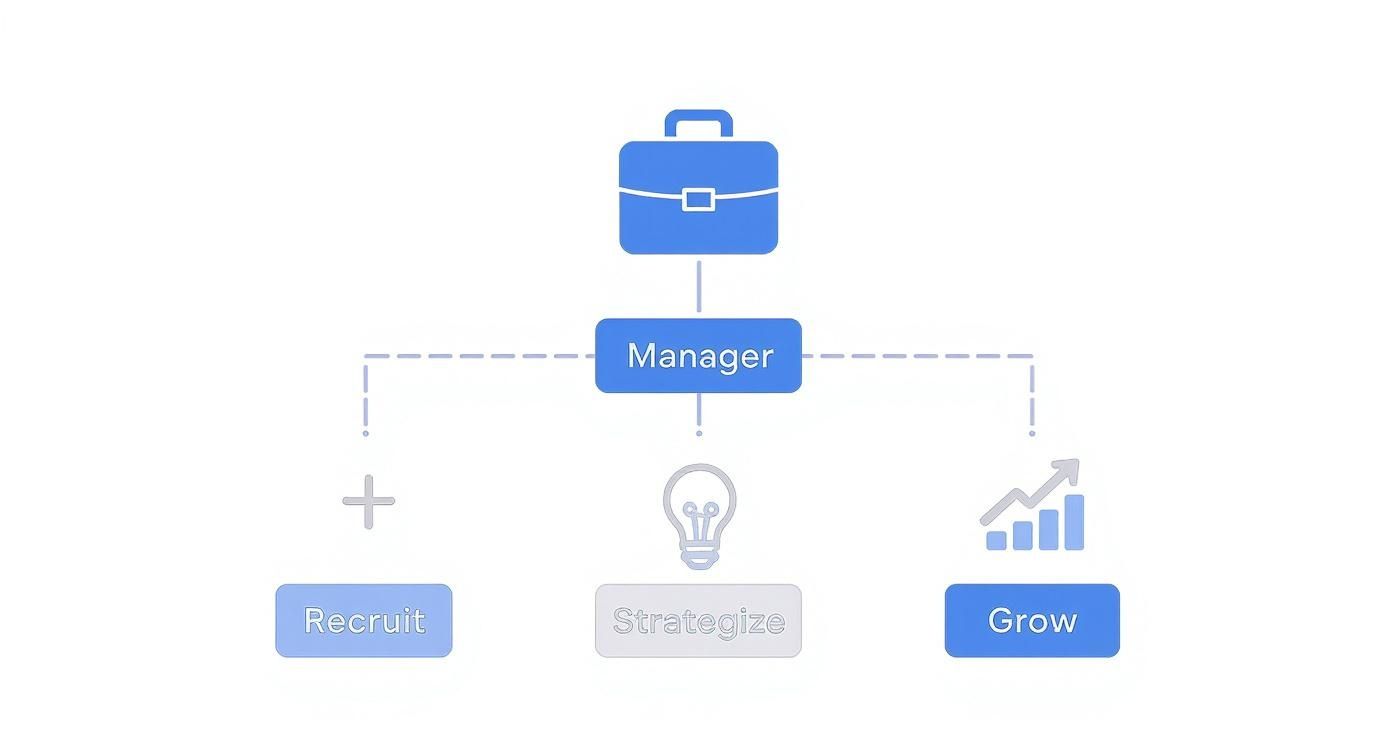
As you can see, it all starts with recruiting the right talent, moves into smart strategic planning, and is laser-focused on measurable growth.
Strategic Partner Recruitment
You can't build a great program without the right partners. A skilled affiliate program manager is a hunter, not a gatherer. They don't just wait for applications to roll in; they proactively find and recruit affiliates who are a perfect match for the brand.
- Identifying High-Value Affiliates: This means looking for niche bloggers with loyal followers, other tech companies whose products complement yours, and creators whose audience looks exactly like your ideal customer.
- Personalized Outreach and Onboarding: Forget mass emails. Great managers build real connections from day one. They welcome new partners with all the tools, resources, and guidance they need to hit the ground running. For a closer look at these tactics, check out our guide on how to recruit affiliates.
Nurturing and Activating Affiliates
Getting affiliates in the door is just step one. The real magic happens when you build strong, lasting relationships that keep them motivated to promote your SaaS. This means consistent, helpful communication and support. The manager essentially becomes a coach, helping partners get the most out of the program.
An effective affiliate program manager understands that partners are an extension of the marketing team. They invest time in building trust and providing value, knowing that strong relationships are the key to long-term, sustainable revenue.
This focus on relationships turns affiliates from passive link-sharers into genuine brand advocates who are excited to be part of your story.
Performance Analysis and Optimization
Data is the lifeblood of a successful affiliate program. A manager is constantly digging into the numbers to see what’s working, what isn't, and where the next big opportunity lies. This isn't just about surface-level metrics like clicks; it's about understanding the "why" behind the performance.
Here's what that looks like in practice:
- Tracking Conversions per Affiliate: Pinpointing who your top performers are and figuring out what makes their strategy so effective.
- Monitoring Campaign ROI: Making sure every promotion is profitable and moves the business closer to its goals.
- Optimizing Commission Structures: Tweaking payout models to encourage high-quality traffic and reward the partners who deliver it.
This analytical mindset is non-negotiable. A huge part of the job is choosing the right tools, which means they need to be familiar with the best affiliate marketing platforms to ensure tracking and reporting are spot-on. With the global affiliate market expected to hit $48 billion by 2027, managers who have these data skills are in incredibly high demand. This relentless focus on optimization is what ensures the affiliate channel delivers a powerful and consistent return on investment.
Key KPIs to Measure Their Success
So, you’ve hired an affiliate program manager. How can you tell if they're actually making a difference? Sure, you can track clicks and sign-ups, but those surface-level numbers don't paint the full picture. A truly successful program needs a leader focused on the key performance indicators (KPIs) that drive real business growth.
Think of it this way: you wouldn't judge a chef just by the number of ingredients they use. You'd judge them by the taste of the final dish. In the same vein, a great affiliate manager isn't measured by busywork, but by tangible results—profitable growth, engaged partners, and a steady stream of revenue.
To really gauge their impact, you need to tie their KPIs directly to your core business goals. This ensures every ounce of their effort pushes the company in the right direction.
Here are the essential KPIs every affiliate program manager should be tracking, broken down by what they tell you about the program's health.
Essential KPIs for an Affiliate Program Manager
Let's break down what each of these categories means in practice.Growth and Acquisition Metrics
This is all about how well the manager can grow the program with the right kind of partners. It’s not just about getting a ton of sign-ups; it's about finding affiliates who will actually contribute.
- New Active Affiliates: This metric counts the new partners who don't just join but actually start driving clicks or sales within their first 30-60 days. A healthy number here is a great sign of strong recruitment and onboarding.
- Partner Activation Rate: This is the percentage of total sign-ups that become active. If this rate is low, it might mean the onboarding is confusing or the wrong types of affiliates are being recruited.
Engagement and Conversion Metrics
Once partners are on board, the manager’s job is to make sure their efforts are actually working. These KPIs measure the quality of the traffic affiliates are sending and how effectively that traffic turns into paying customers.
A high click-through rate with a low conversion rate is a major red flag. It tells you that while partners can grab attention, the traffic they're sending isn't qualified, or maybe the offer itself isn't compelling enough to seal the deal.
Two core metrics to watch here are:
- Click-Through Rate (CTR): This shows how often an affiliate's audience is clicking on their unique link. It’s a good indicator of initial interest.
- Conversion Rate per Partner: This is where the rubber meets the road. It shows you which partners are the best at turning that initial interest into actual sales.
Revenue and Profitability Metrics
At the end of the day, your affiliate channel has to make money. A top-tier manager is always keeping an eye on the bottom line, ensuring the program delivers a solid return on investment.
- Customer Lifetime Value (LTV) by Affiliate: This is a powerful metric. It tracks the long-term value of customers brought in by specific partners, helping you identify affiliates who bring in loyal, high-value users.
- Channel Profitability: This is the ultimate measure of success. It balances the revenue generated against all the costs, like commissions and software fees. For a closer look at the numbers, check out our guide on how to calculate marketing ROI.
How to Find and Hire the Right Candidate
https://www.youtube.com/embed/Dg6zaoaJ_9M
Finding the right affiliate program manager is a lot like recruiting a star player for your team. You can't just toss a generic job ad out there and hope the perfect person stumbles upon it. The best candidates—the ones who can really move the needle—aren't endlessly scrolling through massive job boards.
They’re already busy, engaged in niche communities, industry forums, and professional networks where real experts trade insights. If you want to attract top talent, you have to go where they are. Think beyond LinkedIn and start looking into specialized marketing Slack channels, affiliate marketing subreddits, or even virtual industry events. Taking a more proactive approach shows you understand just how strategic this role really is.
Essential Skills to Look For
A great affiliate manager is a rare mix of skills—they're part analyst, part negotiator, and part relationship-builder, all rolled into one. They need a pretty diverse toolkit to handle everything that comes with building and scaling a successful program.
As you start vetting people, keep an eye out for these core skills:
- Analytical Thinking: They need to be genuinely comfortable diving into data. Can they spot trends, measure what’s working (and what isn't), and fine-tune campaigns to be more profitable?
- Negotiation and Persuasion: A huge part of the job is negotiating. Whether it's setting commission structures, locking in premium ad placements, or convincing a high-value partner to come on board, they have to be able to close the deal.
- Relationship Management: Building real, long-term relationships with affiliates is the secret sauce. This takes great communication skills and a talent for keeping partners motivated and feeling valued.
- Strategic Mindset: You're not just hiring someone to manage tasks; you're hiring a strategist. Look for a candidate who sees the bigger picture and can build an affiliate strategy that plugs directly into your company’s overall growth goals.
Critical Interview Questions to Ask
Once you’ve got a few promising candidates, the interview is where you separate the real pros from the talkers. Skip the standard "tell me about yourself" questions and hit them with real-world scenarios that test how they think on their feet.
Here are a few questions designed to see how a candidate really operates:
- "Walk me through how you would reactivate a high-potential but dormant affiliate who hasn't driven sales in over 90 days." This question gets right to their problem-solving and relationship skills. A great answer will involve diagnosing the problem first, then using personalized outreach and maybe offering a fresh incentive or new creative to get them excited again.
- "How would you structure a commission model for a new SaaS product with a recurring subscription model?" This one probes their strategic and financial smarts. Look for answers that go beyond a simple percentage. Do they mention tiered rewards for top performers, bonuses for initial sign-ups, or even lifetime commissions? That shows they're thinking deeply.
- "Describe a time you had to decline a partnership with a seemingly popular affiliate. What was your reasoning, and how did you handle it?" This is a big one. It reveals their commitment to protecting your brand and prioritizing quality over quantity. It shows you whether they have the conviction to make tough calls to protect the program's integrity.
Hiring the right manager is an investment in scalable growth. A skilled professional transforms the affiliate channel from a minor revenue stream into a core acquisition engine, a fact supported by clear industry data.
When managed well, SaaS affiliate programs can drive incredible results. For instance, top-tier programs bring in an average of 57,000 leads and 9,000 conversions each year. You can find more SaaS affiliate program benchmarks on Rewardful.com to see what's possible.
As you plan your budget, it’s also smart to check the average salaries for affiliate roles to make sure your offer is competitive. With this knowledge in hand, you’ll be ready to find and hire an affiliate program manager who can truly make a difference for your business.
Setting Your New Manager Up for Success
You've just hired a top-tier affiliate program manager. That's a huge win, but it’s really only the first step. To get the most out of their talent, you need to set them up with the right tools and a clear strategy from day one.
Without a solid foundation, even the most experienced manager will get bogged down in administrative busywork instead of focusing on what really matters: driving growth.
Think of it like hiring an expert chef. You wouldn't hand them a dull knife and a faulty stove and expect a five-star meal. In the same way, your new manager needs a powerful command center to run your affiliate program. This is where a dedicated platform like LinkJolt becomes your secret weapon, automating the tedious tasks so they can focus on strategy and building relationships.
This screenshot of the LinkJolt dashboard gives you an idea of what that command center looks like—a clear, at-a-glance view of the most important performance metrics.

This kind of centralized view lets a manager instantly see which affiliates are crushing it and which campaigns need a little help. It empowers them to make smart, data-driven decisions without having to spend hours pulling manual reports.
A Day in the Life with the Right Tools
Picture your new manager’s first week. With a platform like LinkJolt, their daily workflow shifts from being reactive to proactive. Instead of getting lost in spreadsheets trying to verify sales or calculate commissions, they can jump right into high-impact work.
- Automated Tracking: They get accurate, real-time tracking of every click and conversion. This means they can see what's working right now and double down on successful tactics without delay.
- Integrated Payouts: Let's be honest, manual commission payouts are a time-consuming headache just waiting for errors to happen. An integrated system handles all the payments automatically, which not only frees up your manager's time but also keeps your affiliates happy with fast, reliable rewards.
- Built-in Fraud Protection: Your manager can scale the program with confidence, knowing that sophisticated fraud detection is running 24/7. It weeds out fake clicks and sign-ups, protecting your budget and keeping your data clean.
The right technology doesn't just make an affiliate program manager's job easier—it makes them more strategic. By removing friction from their daily tasks, you empower them to accelerate results and maximize the channel's ROI.
This streamlined approach is absolutely crucial. We're in a market where brands that mix affiliate marketing with other channels see sales jump by up to 46%. Efficiency isn't just a nice-to-have; it's the key to winning. For a deeper dive, check out these insightful affiliate marketing statistics on designrush.com to see the full potential.
Arming your manager with powerful tools is one of the most important steps in their onboarding. We've found that many of the same principles for welcoming new customers apply here. You can learn more in our guide on customer onboarding best practices.
Common Questions About Hiring an Affiliate Manager
Bringing on a dedicated affiliate manager is a big step, so it’s natural to have questions. You're not just filling a seat; you're investing in a new growth channel. Let's walk through some of the most common questions leaders ask before making this hire.
Getting these things straight from the get-go helps everyone get on the same page and ensures you find the right person to build a partnership program that actually moves the needle.
What's the Difference Between an Affiliate Manager and an Influencer Manager?
This is a common point of confusion, but the distinction is critical. While both roles involve partnerships, their core focus is fundamentally different. Think of it as the difference between a direct sales team and a PR team—both contribute to growth, but in very different ways.
An affiliate program manager is all about performance. Their world revolves around driving trackable actions like sales, trials, or demos. They live and breathe data—conversion rates, ROAS, and customer lifetime value are their key metrics. Success is measured in dollars and cents.
An influencer manager, on the other hand, is often focused on brand awareness, reach, and engagement. Their goal is to get your brand story in front of the right audience. An experienced affiliate manager will absolutely work with influencers, but they'll structure those partnerships around performance, turning creators into revenue-driving affiliates.
Can't a Junior Marketer Just Handle Our Affiliate Program?
It's tempting to hand the affiliate program over to a junior marketer to keep costs down. On the surface, it seems simple enough. But this almost always results in a program that putters along instead of taking off.
While a junior employee can certainly handle basic admin tasks, they won't have the strategic chops to scale the channel. A seasoned affiliate manager brings a specific, hard-won skill set to the table:
- Sharp Negotiation: They know how to structure deals that are competitive yet profitable and can secure premium placements that a junior marketer wouldn't even know to ask for.
- Data-Driven Strategy: They can dive deep into the numbers to see which partners are truly valuable and which campaigns need tweaking or cutting.
- Relationship Building: They understand the art of motivating top-tier partners, building genuine trust that leads to long-term, sustainable growth.
Giving the program to someone without experience usually means it becomes a passive, reactive task on their to-do list. A pro actively hunts for opportunities, recruits the right partners, and turns the channel into a powerful growth engine. The ROI is almost always worth the investment.
How Long Until We See Results from a New Manager?
Patience is key here. Building a healthy affiliate program is a marathon, not a sprint. While you want to see momentum, it's crucial to have realistic expectations about the timeline.
Here’s a rough idea of what to expect:
- First 30-60 Days: This is the foundation-laying phase. Your new manager will be deep in discovery mode—auditing what you currently have, sizing up the competition, defining who your ideal partners are, and starting the first wave of outreach.
- Within 90 Days: You should start seeing the first green shoots. This looks like a handful of high-quality partners coming on board, the first few campaigns going live, and the first affiliate-driven sales starting to trickle in.
- After 6-9 Months: Now the flywheel should really start spinning. Key affiliate relationships will be solidified, campaigns will be optimized based on real data, and you’ll see a clear, measurable impact on your revenue.
What's a Typical Salary for This Role?
To attract top talent, you need to know the market rate. Affiliate manager salaries can swing based on experience, company size, and location, but there are some solid benchmarks.
In the United States, you can expect the average salary for an affiliate program manager to be around $81,000 to $82,000 per year. For a senior manager at a larger SaaS company, especially in a tech hub like San Francisco or New York, that figure can easily climb north of $100,000. This compensation reflects the direct impact the role has on the bottom line, making it one of the most critical hires for a growing business.
Ready to set your new affiliate manager up for success from day one? LinkJolt gives them an all-in-one platform to automate tracking, handle payouts, and stop fraud in its tracks. That way, they can skip the busywork and focus on what you hired them to do—drive serious growth.
Watch Demo (2 min)


Trusted by 300+ SaaS companies
Start Your Affiliate Program Today
Get 30% off your first 3 months with code LINKJOLT30
✓ 3-day free trial
✓ Cancel anytime