What Is Cookie Tracking and How Does It Work?

Ollie Efez
December 20, 2025•20 min read

Cookie tracking is how websites remember who you are and what you've been up to. They do this by storing tiny text files, known as cookies, on your browser. This simple process is the secret sauce behind personalized experiences online, from keeping items in your shopping cart to showing you ads that feel uncannily relevant.
Your Digital Name Tag: An Introduction to Cookie Tracking
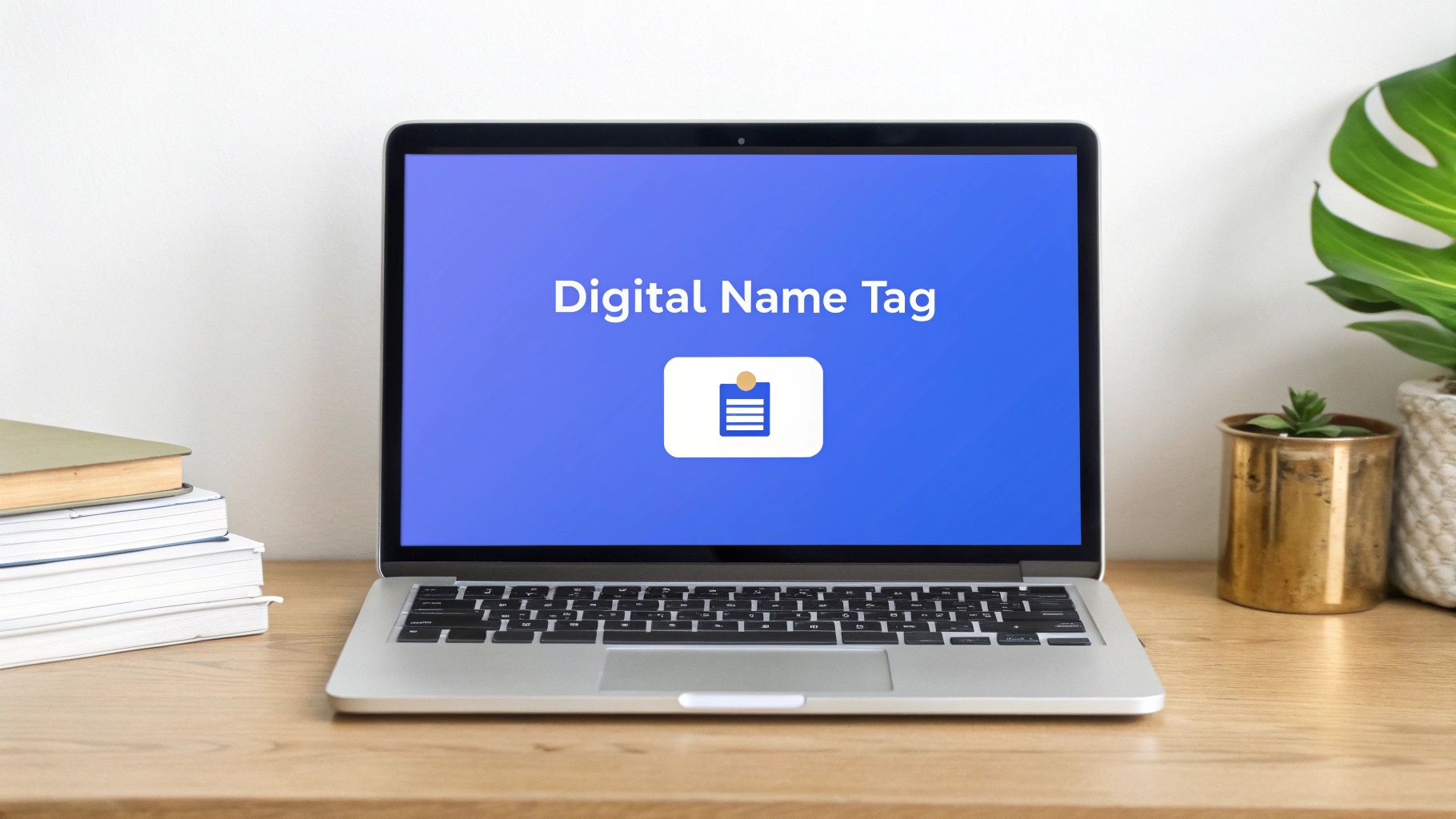
Think of an internet cookie as a digital name tag that a website hands to your browser. When you visit a site for the first time, it slaps this little file on your device. The next time you swing by, the site peeks at the name tag, recognizes you, and can instantly tailor your experience based on what it remembers about you.
This simple mechanism is the engine that makes much of the modern web run smoothly. Without it, you’d have to log in every single time you visited a site, and your shopping cart would magically empty itself the moment you clicked on a new page. It's a foundational piece of tech for creating a seamless user journey.
Why Cookie Tracking Matters
At its core, cookie tracking is a method for websites to maintain a memory of user interactions. This memory is incredibly useful, but it also creates a classic trade-off between online convenience and personal data privacy. On one side, it makes websites far easier to use; on the other, it fuels a massive, multi-billion dollar advertising ecosystem.
The benefits for users are usually immediate and obvious:
- Convenience: Cookies remember your login details, language preferences, and items you've added to a cart. It just saves you time and clicks.
- Personalization: Websites can show you content, products, or recommendations based on your past behavior, making your visit feel much more relevant.
- Seamless Experience: By remembering your session, cookies let you pick up right where you left off, whether that’s filling out a form or watching a video.
For businesses, cookie tracking is an absolutely essential tool for understanding how customers behave and for fine-tuning their marketing strategies.
Tracking enables companies to see user patterns, behaviors, and preferences to form strategies based on that information. It’s the data that fuels everything from website improvements to targeted advertising campaigns that reach interested audiences.
The Privacy and Business Connection
However, this tracking capability comes with some serious privacy strings attached. While cookies from the site you're actively visiting (first-party cookies) are generally seen as helpful, cookies placed by other domains (third-party cookies) can follow you across the web. This cross-site tracking builds a detailed profile of your interests, which is then used for targeted advertising.
This practice sits at the very heart of the debate around digital privacy, sparking regulations like GDPR in Europe and the push by browsers like Chrome and Safari to phase out third-party cookies entirely. Understanding how this simple "name tag" works is the first step in grasping the forces shaping the internet's future—a future where user consent and data control are taking center stage.
How Cookies Went From Simple Reminders to Powerful Trackers
Cookies didn't start out as the sophisticated, and sometimes sneaky, tracking tools we talk about today. Their origin story is actually pretty humble, born from a simple need for websites to have a basic memory. Before cookies, the web was a place of digital amnesia—every time you loaded a new page, the site completely forgot who you were.
This constant forgetfulness made simple tasks, like online shopping, a nightmare. Imagine adding an item to your cart, clicking over to another page, and poof—your cart is empty again. That was the exact problem Lou Montulli, a founding engineer at Netscape Communications, set out to solve back in 1994. His solution was a small text file the browser could hang onto, a "magic cookie," to remember user information from one page to the next.
The initial goal was pure convenience. Cookies were built to handle the things we now take for granted, like keeping you logged in or remembering your site preferences. They were just simple reminders, designed to make browsing a smoother, more logical experience.
The Shift From Convenience to Commerce
The real turning point came when the advertising industry saw the massive potential hiding in this simple technology. If a cookie could remember a username, it could also be assigned a unique ID to remember a user across different websites. This single realization gave birth to the third-party cookie and fundamentally changed the game.
Advertisers started placing their own cookies on publisher websites. When you visited a blog that displayed an ad from an ad network, that network could drop a cookie on your browser. As you hopped to other sites that were part of the same ad network, the advertiser could read that cookie, effectively creating a trail of your digital footprints.
This cross-site tracking capability was the catalyst that ignited the behavioral advertising industry. It allowed companies to build detailed profiles based on browsing habits, moving from generic, shotgun-style ads to highly targeted campaigns. Suddenly, a piece of tech built for remembering a shopping cart was powering a complex, data-driven advertising machine.
Cookies quickly evolved into powerful tracking tools for third-party advertisers. By embedding unique identifiers, they allowed ad networks to follow users' browsing habits, building detailed profiles for targeted ads. This sparked the explosive growth of online advertising, turning it into a multi-billion-dollar industry.
For instance, the digital ad market exploded from its modest beginnings to over $120 billion a year by the early 2020s, an expansion fueled almost entirely by cookie-based tracking. You can even explore a timeline of cookie depreciation to see just how intertwined their history is with the ad industry's growth.
From Innovation to Controversy
As cookie tracking became more powerful and widespread, so did the concerns around user privacy. The idea that unknown companies were silently monitoring every click and page view felt invasive to many people. This growing unease sparked a public conversation that has led to some of the biggest changes in how the internet works today.
This evolution from a helpful tool to a source of controversy was marked by a few key developments:
- Browser Pushback: Browsers like Safari and Firefox took a stand, implementing features to block third-party cookies by default and giving users more control over their own data.
- Regulatory Action: Governments stepped in with landmark legislation. The GDPR in Europe and the CCPA in California put the power back in users' hands by mandating explicit consent for cookie tracking.
- The Rise of Consent Banners: Those "accept cookies" pop-ups we all see became a legal necessity. They made the once-invisible process of tracking visible, forcing websites to be transparent about what they were doing.
The journey of the cookie—from a simple session tool to a powerful tracking mechanism—is a perfect illustration of how technology can evolve far beyond its original intent. Understanding this history is crucial for grasping why the question of what is cookie tracking has become such a central and contentious topic in discussions about the future of the web.
First-Party vs. Third-Party Cookies: What's the Difference?
To really get what cookie tracking is all about, you have to understand the single most important distinction in the cookie world: first-party vs. third-party. While they’re both just small text files, their purpose, where they come from, and how they impact your privacy are worlds apart.
Think of it as the difference between a private conversation and having someone eavesdrop from across the room.
A first-party cookie is created and placed on your browser by the website you are directly visiting. It’s a direct, one-to-one relationship. When you log into your favorite online store, a first-party cookie remembers you so you don’t have to type your password on every single page. When you add a pair of shoes to your cart, another one keeps it there while you keep browsing.
These cookies are pretty much essential for a smooth, convenient web experience. They handle the core tasks that make sites user-friendly, like remembering your language preferences, saving items in a shopping cart, and keeping you logged in. For the most part, first-party cookies are seen as harmless and genuinely helpful.
The Role of First-Party Cookies
First-party cookies are the backbone of a personalized experience on any single website. Their job is to help the site remember you and what you’re doing during your visit, which boils down to a few key functions:
- Session Management: They keep you logged in as you click from page to page. Simple, but crucial.
- Personalization: These cookies store your preferences—like your chosen language, location, or currency—so you don't have to set them every time.
- User Analytics: Website owners use them to see how you interact with their site, helping them figure out what's working and what isn't.
Because they’re tied directly to the domain you’re on, browsers treat them much more favorably. They are almost never blocked by default and are generally accepted as a necessary part of how the internet functions.
The Power of Third-Party Cookies
This is where the conversation around privacy really heats up. A third-party cookie is created by a domain other than the one you are currently on. These are typically placed by ad networks, social media platforms, or analytics services whose code is running on the website you’re visiting.
Imagine you're reading a news article. The news site places its own first-party cookie to remember your settings. But at the same time, an ad on that page, served by an ad network, places its own cookie—a third-party cookie. This cookie isn't there to help the news site; its job is to track you for the ad network.
As you browse other websites that also use this same ad network, that little cookie reports back, building a detailed profile of your interests all across the web. This cross-site tracking is what enables behavioral advertising, the reason a pair of sneakers you looked at on one site can suddenly pop up in ads on completely unrelated websites.
Third-party cookies are the engine of the programmatic advertising ecosystem. They allow advertisers to follow users across the digital landscape, creating detailed behavioral profiles used for hyper-targeted ads that follow you from site to site.
This capability is at the very heart of the privacy debate. The practice became so widespread that browsers and regulators finally started to push back. Chrome's plan to phase out third-party cookies is a massive shift, especially given its over 65% global browser market share. This move follows actions from Safari, which blocked them in 2020, and Firefox in 2019, signaling a major industry change driven by consumer privacy concerns. The end of these cookies is forcing marketers to find entirely new ways to reach audiences, as you can see in the history of cookie deprecation.
First-Party vs. Third-Party Cookies: A Direct Comparison
To make the distinction crystal clear, it helps to see the differences side-by-side. While both are just bits of data, their roles and the implications for your privacy couldn't be more different.
This table breaks it down.
The lifespan of these data files is also a critical factor in how they operate. To learn more about how long they last, you can explore our detailed guide on cookie duration.Ultimately, grasping this core distinction is the first and most important step to understanding the world of modern data privacy and tracking.
How Cookie Tracking Powers Affiliate Marketing
Walk into the world of affiliate marketing, and you'll find that this multi-billion dollar industry is almost entirely powered by one simple piece of technology: the cookie. It acts as the digital bookkeeper, making sure partners get paid for the customers they refer. It’s the perfect real-world example of what cookie tracking was built to do in a commercial setting.
Think about the last time you read a software review on a blog. The writer probably included a special link to the software's website. The moment you click that link, an affiliate marketing platform drops a small cookie onto your browser. This isn't just any cookie; it contains a unique identifier, essentially stamping your browser with the blogger's affiliate ID.
This tiny action is the most critical first step in the entire process. From that point on, the cookie acts as a silent messenger, ready to attribute any future purchase you make to that specific blogger. It’s the foundational piece that connects a referral to a sale.
The Journey from Click to Commission
Let's trace the user's path to see how this plays out. After you click the affiliate link and land on the merchant’s website, you might look around, check out pricing, and maybe even leave the site to think it over. A few days later, you decide you're ready to buy and go directly back to their website.
When you complete your purchase, the merchant's site scans your browser for that affiliate cookie. It finds it, reads the unique affiliate ID inside, and automatically credits the original blogger with the sale. This whole process, known as affiliate link tracking, ensures the right partner gets their commission, even if the sale happens long after the initial click. We dive deeper into the mechanics in our guide on how to track affiliate links.
This infographic gives a clear visual breakdown of the two main types of cookies that make the web work, highlighting how they differ in origin and purpose.

As the visual shows, first-party cookies are set by the site you’re visiting to improve your experience. Third-party cookies, on the other hand, are created by other domains, mainly for advertising and tracking you across different websites.
Understanding Cookie Lifetimes and Attribution
A crucial piece of this puzzle is the cookie lifetime, often called the attribution window. This is simply a pre-set expiration date for the cookie, which determines how long an affiliate has to get credit for a sale after someone clicks their link.
A 30-day cookie lifetime is a common industry standard. This means if a user clicks an affiliate link and buys something anytime within those 30 days, the affiliate earns their commission. But if the purchase happens on day 31, the cookie has expired, and no credit is given.
The cookie lifetime is a critical agreement between a business and its partners. It defines the window of opportunity for earning a commission and directly shapes an affiliate’s income potential.
This time limit is essential for a few reasons:
- Fair Attribution: It creates a clear and fair system for rewarding partners who send valuable traffic.
- Incentivizes Affiliates: Programs with longer cookie lifetimes often attract higher-quality affiliates.
- Manages Costs: It sets a reasonable boundary on how long a business is obligated to pay for a referral.
Of course, the model isn't perfect. Aggressive ad blockers can stop cookies from being set in the first place, and shady practices like cookie stuffing (placing multiple affiliate cookies without a user's knowledge) can mess up fair attribution. Despite these hurdles, cookie tracking remains the primary engine driving the massive and ever-growing world of affiliate marketing.
Understanding Privacy Laws and the Rise of Consent
For years, cookie tracking operated in a digital wild west. There were few rules governing how user data was collected and used, which led to a growing unease among consumers who felt their online activities were being monitored without their knowledge or permission.
This rising tide of public concern created the perfect storm for landmark privacy legislation. Lawmakers on both sides of the Atlantic began drafting rules to give individuals more control over their personal data, fundamentally changing the power dynamic between users and the companies tracking them. The era of unchecked data collection was coming to an end.
The GDPR and CCPA: A New Era of Data Control
The first major turning point came in 2018 with Europe's General Data Protection Regulation (GDPR). This sweeping law set a new global standard for data privacy, impacting any organization that handles the data of EU citizens, no matter where the company is based.
Under GDPR, the old model of "implied consent"—where just using a website was considered an agreement to be tracked—was thrown out the window. The law mandated that consent must be:
- Freely given: Users can't be forced or guilt-tripped into accepting cookies.
- Specific: Consent has to be requested for distinct purposes, not bundled into one vague approval.
- Informed: Users must be told exactly what data is being collected and why.
- Unambiguous: Consent requires a clear, affirmative action, like clicking an "Accept" button.
This shift gave rise to the cookie consent banners we see everywhere today. Suddenly, the invisible process of tracking became visible, forcing websites to be transparent and giving users a real choice.
Following Europe's lead, California enacted the California Consumer Privacy Act (CCPA), which gave residents new rights over their data, including the right to know what information is being collected and the right to opt out of its sale. These regulations marked a significant move toward empowering individuals. To better navigate these rules, understanding how to protect your privacy online has become essential for users everywhere.
The Shift from Implied to Explicit Consent
The most profound change brought by these laws was the move from a passive, implied consent model to an active, explicit opt-in system. Before GDPR, most sites operated on the assumption that if you were there, you were okay with being tracked. Now, they have to ask your permission first.
This is exactly why you see those detailed cookie banners with toggles and options. They are a direct result of regulations demanding that users have granular control over what they agree to. These banners are more than just a legal formality; they represent a fundamental shift toward data transparency.
The rise of consent banners transformed cookie tracking from an opaque background process into a transparent, user-controlled choice. It forced the industry to acknowledge that a user's data belongs to them, not to the companies that collect it.
This new reality pushed website owners to rethink how they engage with visitors. Instead of assuming consent, they now have to earn it by being upfront about their data practices. You can dive deeper into the specifics in our dedicated guide covering everything you need to know about cookies.
How Browsers Are Reinforcing Privacy
It wasn't just regulators who responded to the growing demand for privacy. Major web browsers began taking matters into their own hands, leading a tech-driven charge against invasive tracking. Apple’s Safari and Mozilla’s Firefox were early pioneers, implementing features to block third-party cookies by default.
This industry-wide push gained serious momentum as public sentiment soured on tracking. A Pew Research study found that 79% of Americans felt they had little control over their data, with 64% believing it was impossible to avoid online tracking. In response, Apple introduced Intelligent Tracking Prevention (ITP) in Safari back in 2017 to progressively block third-party cookies.
Now, with Google Chrome gradually phasing out third-party cookies, the industry is at a major inflection point. This browser-led movement, combined with strong legal frameworks, is accelerating the transition to a more private web where user consent isn't just a suggestion—it's the law.
Exploring the Future of Online Tracking Beyond Cookies

With third-party cookies crumbling, the entire digital marketing world is bracing for what comes next. This isn’t just a minor technical tweak; it's a fundamental rewiring of how businesses understand and connect with people online. We're moving away from the era of individual surveillance and toward methods that actually respect user privacy.
This isn’t a change that happened in a vacuum. Users and tech giants pushed the industry here. Take Apple's App Tracking Transparency feature, which launched in 2021. When given a clear choice, only 25% of users opted in to being tracked across apps. That sent a massive signal to the $455 billion global ad industry: the old way of doing things was on borrowed time. You can see how this all unfolded in this excellent timeline of cookie depreciation.
There’s no single magic bullet to replace the cookie. Instead, we’re seeing a mix of different technologies emerge, each trying to strike that delicate balance between effective marketing and personal privacy.
Shifting to Server-Side and Contextual Methods
One of the most solid alternatives gaining ground is server-side tracking. Instead of your browser blasting data directly to countless third parties, information is first sent to the company’s own server. From that controlled environment, the business decides what data gets passed along to analytics tools or ad platforms. It gives companies far more control and protects user privacy by filtering out sensitive details before they ever leave the house.
At the same time, an old idea is making a huge comeback: contextual advertising. It’s a refreshingly simple concept. Ads are targeted based on the content of the page you’re on right now, not your creepy, months-long browsing history. Reading an article about hiking boots? You see ads for hiking gear. It’s relevant, it’s not invasive, and it doesn't need to know a single thing about you personally.
The core idea behind a cookieless future is a return to basics. Instead of tracking individuals across the web, the focus is shifting to understanding context and leveraging first-party data that users willingly share.
Other Emerging Tracking Technologies
Beyond those two, a few other technologies are being tested, though some come with their own privacy baggage. Each offers a different piece of the tracking puzzle.
Here are a few of the key alternatives gaining traction:
- Device Fingerprinting: This technique pieces together specific, non-personal details about a user's device—like screen resolution, operating system, and installed fonts—to create a surprisingly unique identifier. While it's cookie-free, it can be so accurate that it raises its own serious privacy questions.
- Tracking Pixels: You’ve definitely encountered these. They’re tiny, invisible 1x1 pixel images embedded in emails or on websites. When the pixel loads, it pings a server, confirming that you've opened an email or visited a page. It’s a simple but effective way to track engagement.
- URL Tokens: Sometimes, the tracking information is passed directly inside the link itself. When you click a link from an email newsletter, a unique token might be tacked onto the end of the URL. This can identify the campaign and track performance without needing a persistent cookie on your machine.
As the industry figures this out, the future will almost certainly be a blend of these strategies. The wild west of unchecked third-party cookie tracking is over. What’s replacing it is a more complex, but ultimately more transparent, ecosystem built on user consent and a little more respect.
Common Questions About Cookie Tracking
All this talk about cookies, privacy, and tracking can get a little confusing. Let's clear up some of the most common questions people have.
Can I Just Block All Cookies?
Technically, yes, your browser settings let you block everything. But you probably shouldn't. Blocking first-party cookies will make the internet a frustrating place—you'll get logged out of sites constantly, and things like your shopping cart will mysteriously empty.
A much better approach is to just block third-party cookies. Most modern browsers already do this for you by default to stop creepy cross-site tracking.
Are Cookies a Security Risk?
By themselves, no. Cookies are just tiny text files; they can't run code or infect your computer with malware. The risk isn't the cookie itself, but the data it holds and the security of the website that issued it.
If a website has weak security and gets hacked, attackers could potentially steal cookie data. This could lead to something called session hijacking, where someone could impersonate you on that specific site. It's a privacy risk more than a direct security threat to your device.
What Actually Happens When I Clear My Cookies?
Clearing your cookies is like giving every website you've ever visited a case of amnesia.
It logs you out of everything, resets all your saved preferences (like language or location settings), and empties any active shopping carts. From the websites' perspective, you're a brand new visitor again.
Why Is Everyone Getting Rid of Third-Party Cookies?
It all comes down to a massive public and regulatory push for better user privacy. People got tired of feeling like they were being followed across the entire internet by invisible trackers building detailed profiles of their behavior for ad targeting.
Third-party cookies were the main technology behind this, and regulators started cracking down. Browsers like Safari and Firefox have been blocking them for years, and Google's Chrome is the last major player to join the party.
The transition has been messy. At one point, Google flipped the switch for 1% of Chrome users—around 30 million people—to test the waters. But they had to hit pause after UK regulators raised concerns about competition, eventually leading Google to pivot away from a full phase-out to giving users more control instead. You can get a deeper dive into the whole saga by checking out the cookie deprecation timeline on gumgum.com.
Ready to manage your affiliate program with precision and transparency? LinkJolt provides robust, cookieless tracking solutions to future-proof your partnerships. Start scaling your affiliate marketing at linkjolt.io.
Watch Demo (2 min)


Trusted by 300+ SaaS companies
Start Your Affiliate Program Today
Get 30% off your first 3 months with code LINKJOLT30
✓ 7-day free trial
✓ Cancel anytime