8 Powerful Example of Referral Marketing Campaigns to Copy in 2026
8 Powerful Example of Referral Marketing Campaigns to Copy in 2026

Ollie Efez
February 14, 2026•22 min read
Referral marketing is one of the most powerful engines for sustainable, low-cost customer acquisition. When executed correctly, it transforms your existing, happy customers into your most effective and trusted sales team. But what does a truly successful referral program look like in practice, and how can you build one yourself? This guide moves beyond abstract theory to provide a tactical breakdown of real-world campaigns that generated explosive growth.
We will dissect the mechanics behind some of the most iconic referral marketing examples, from Dropbox’s viral loop to Airbnb’s travel credit system. For each example of referral marketing, we won't just tell you what they did; we will show you how they did it.
You will find:
- A strategic analysis of the incentive structure.
- The psychological triggers that made each campaign effective.
- Actionable, step-by-step blueprints to replicate their success.
This comprehensive listicle is designed to be a practical playbook. We will break down the specific tactics used by companies like Uber, PayPal, and Canva, providing clear takeaways you can apply directly to your own business. We’ll also explain how a dedicated platform like LinkJolt can streamline implementation, from generating unique referral links to automating reward payouts, freeing you to focus on strategy instead of getting bogged down in manual tracking. Get ready to learn from the best and build a referral program that genuinely drives measurable growth.
1. Dropbox Two-Sided Referral Program
The Dropbox referral program is a landmark example of referral marketing that set the gold standard for SaaS growth. The concept was simple yet revolutionary: reward both the existing user (the referrer) and the new user (the friend) with something they both genuinely valued, free storage space.
This two-sided incentive created a powerful viral loop. Existing users were motivated to share because they got more storage, and new users were motivated to sign up through a referral link because they started with a bonus. Dropbox integrated the referral call-to-action seamlessly into its onboarding process and user dashboard, making it an effortless, natural step for users to take. The result was a staggering 3900% growth in 15 months, scaling from 100,000 to 4 million users.
Strategic Breakdown
- Incentive: The reward was not a cash discount but an enhancement of the core product itself, 500 MB of extra storage space per successful referral. This directly increased the user's investment in the platform.
- Mechanics: A simple, shareable referral link was generated for each user. The process was frictionless, requiring just a few clicks to invite contacts via email or social media.
- Integration: The referral prompt was a key part of the "Get Started" checklist for new users, ensuring maximum visibility and participation from the very beginning.
Key Insight: Dropbox succeeded by making the reward an integral part of the product experience. Free storage had a higher perceived value than a small cash bonus and encouraged deeper product usage.
How to Replicate This Strategy
- Identify a Core Value Incentive: What can you offer that enhances your product? This could be premium features, usage credits, or early access to new tools. The goal is to tie the reward back to your service.
- Implement a Two-Sided Model: Reward both the referrer and the new customer. This doubles the motivation and makes the referrer feel like they are giving a gift, not just making a sales pitch.
- Embed Referrals into Onboarding: Place your referral CTA in a high-visibility area like the user dashboard or onboarding checklist. Prompt users to refer friends right after they experience an "aha!" moment with your product.
- Track and Optimize: Use referral marketing software to monitor performance. A/B test different reward amounts and messaging to find the sweet spot for your audience. For a deeper dive into available tools, you can find a comprehensive guide on the best referral marketing software to manage your campaigns effectively.
2. Airbnb Travel Credit Referral
The Airbnb referral program is a premier example of referral marketing that fueled its global expansion by turning its community into a powerful acquisition engine. The model is elegantly simple: reward both the referrer (existing user) and the referee (new user) with travel credits they can apply to future bookings or stays.

This dual-sided incentive system created a self-sustaining growth loop built on trust and value. Existing users were motivated to share because they earned credits for their next trip, while new users were incentivized to sign up through a referral to get a discount on their first experience. This strategy proved wildly successful, with referrals accounting for 25% of all new sign-ups during the company's critical early growth phase.
Strategic Breakdown
- Incentive: The reward is a tangible monetary value (travel credit) directly tied to using the platform. For a referrer, it reduces the cost of their next vacation; for a new user, it lowers the barrier to trying the service.
- Mechanics: Users get a unique referral link to share via email, social media, or direct messaging. The credits are automatically applied to both accounts only after the new user completes a qualifying stay, preventing fraud and ensuring only high-quality referrals are rewarded.
- Integration: Airbnb prominently features the referral program in the user profile section and in post-booking communications, encouraging users to share their positive experiences immediately.
Key Insight: Airbnb’s success came from framing the referral as a gift of travel. Users weren't just "referring a service"; they were "giving their friends money for a vacation," which feels more personal and authentic.
How to Replicate This Strategy
- Offer a Core Value Credit: Identify a currency within your ecosystem. This could be service credits, subscription discounts, or funds to spend on your marketplace. The key is making the reward directly usable on your platform.
- Trigger Rewards on Action, Not Sign-up: Delay the reward payout until the new user completes a key action, like a purchase or a subscription payment. This ensures you are rewarding for actual business value, not just leads.
- Localize Your Incentives: If you operate in multiple markets, adjust the credit amount to reflect local currency values and purchasing power. A $25 credit might be significant in one country but negligible in another.
- Emphasize the Gifting Angle: Use messaging that encourages users to "Give friends a discount" or "Share the experience." To learn more about building a compelling message, explore these effective referral marketing strategies that can enhance your campaign's appeal.
3. Uber Ride-Credit Referral
Uber's growth strategy is a legendary example of referral marketing, leveraging its user base to fuel rapid global expansion. The model was built on a simple, powerful premise: give a free ride, get a free ride. By rewarding both the referrer and the new rider with ride credits, Uber effectively subsidized the first-trip experience, removing a key barrier to entry.
This two-sided incentive turned every passenger into a brand advocate. The program was brilliantly integrated into the app, making it incredibly easy for users to share their personal code via text, email, or social media. This created a low-friction viral loop that drove explosive growth, with referrals reportedly accounting for over 30% of new riders in many cities during its peak expansion phase.
Strategic Breakdown
- Incentive: The reward was free ride credit, a tangible and immediately useful benefit that directly tied into the core service. This credit eliminated the cost of trial for new users and rewarded loyal customers.
- Mechanics: Each user received a unique, easy-to-remember referral code and link. The reward was automatically applied to both accounts after the new user completed their first trip, ensuring a seamless and satisfying experience.
- Integration: The "Free Rides" tab was prominently featured in the app's main menu, and push notifications prompted users to share after a positive experience, like a 5-star ride. This kept the program top-of-mind.
Key Insight: Uber capitalized on network effects by making the reward transactional and instant. The free credit had a high perceived value and directly encouraged product usage, turning a marketing cost into a guaranteed ride.
How to Replicate This Strategy
- Offer a Service-Based Credit: Identify a core transactional unit of your product (a ride, a subscription month, a usage credit) and offer it as a reward. This ensures your marketing spend translates directly into product engagement.
- Automate the Reward Payout: Ensure that both the referrer and the new customer receive their credit instantly upon the referral conditions being met (e.g., first purchase or trip completed). Instant gratification reinforces the positive behavior.
- Use Triggers and Nudges: Prompt users to share at moments of high satisfaction. This could be after a successful transaction, a positive customer support interaction, or when they achieve a milestone within your app.
- Simplify Sharing: Generate a simple referral link or code for every user. For a more detailed guide on how these work and why they are effective, you can learn more about what a referral link is and how to optimize it for your campaigns. Make it shareable with a single tap.
4. PayPal Cash-Back Referral
PayPal’s early growth is a legendary example of referral marketing that demonstrated the raw power of a direct cash incentive. Faced with the chicken-and-egg problem of building a two-sided payment network, PayPal literally paid users to join and bring their friends. The model was straightforward: both the referrer and the new user received a cash deposit ($10 at first) directly into their PayPal accounts after the new user signed up and linked a bank account.
This strategy was incredibly effective because the reward was the product itself. Giving users cash they could immediately spend or withdraw showcased the platform's utility and built trust. It fueled explosive, albeit expensive, user acquisition, helping PayPal achieve a critical mass of users and establishing the network effect that made it the dominant online payment system. This aggressive approach led to daily growth rates of 7% to 10%, helping them reach 1 million users in just over a year and 5 million by the summer of 2000.
Strategic Breakdown
- Incentive: The reward was pure cash, a universally understood and desired incentive. The initial $10 offer was a significant motivator in the late 90s and early 2000s.
- Mechanics: Users were given a unique referral link to share. The cash bonus was credited only after the new user completed a key activation step, linking a bank account, which reduced fraud and ensured they were a high-quality user.
- Integration: The referral program was central to PayPal's marketing message. It was promoted heavily on their website and through early online advertising, positioning it as a core reason to sign up.
Key Insight: A direct cash incentive is one of the most powerful motivators, but it must be tied to a key activation event to ensure user quality and prevent abuse. PayPal succeeded by making the reward an instant demonstration of the product's value.
How to Replicate This Strategy
- Offer a Liquid Incentive: If your business model supports it, offer a direct cash reward or account credit. This works best for financial services, marketplaces, or platforms where money is already changing hands.
- Gate the Reward Behind a Key Action: Don't pay out just for a sign-up. Require the referred user to complete a crucial step, like making a first purchase, linking a payment method, or completing their profile. This protects your budget and improves lead quality.
- Plan for Scalability: A cash-intensive program is not sustainable forever. Have a clear plan to reduce the reward amount as your brand grows and network effects take hold, just as PayPal eventually lowered its bonus from $20 to $10, and then to $5.
- Implement Robust Fraud Detection: Cash programs are a magnet for fraud. Use software to monitor for suspicious activity like multiple sign-ups from the same IP address or device, and require verification (KYC) before paying out rewards.
5. Robinhood Free-Stock Referral
Robinhood's free-stock program is a brilliant example of referral marketing that weaponized curiosity and the fear of missing out (FOMO). The premise was irresistible: both the referrer and the new user received a free share of stock, with its value being a complete surprise, ranging from a few dollars to several hundred. This gamified approach transformed a standard financial incentive into an exciting lottery.
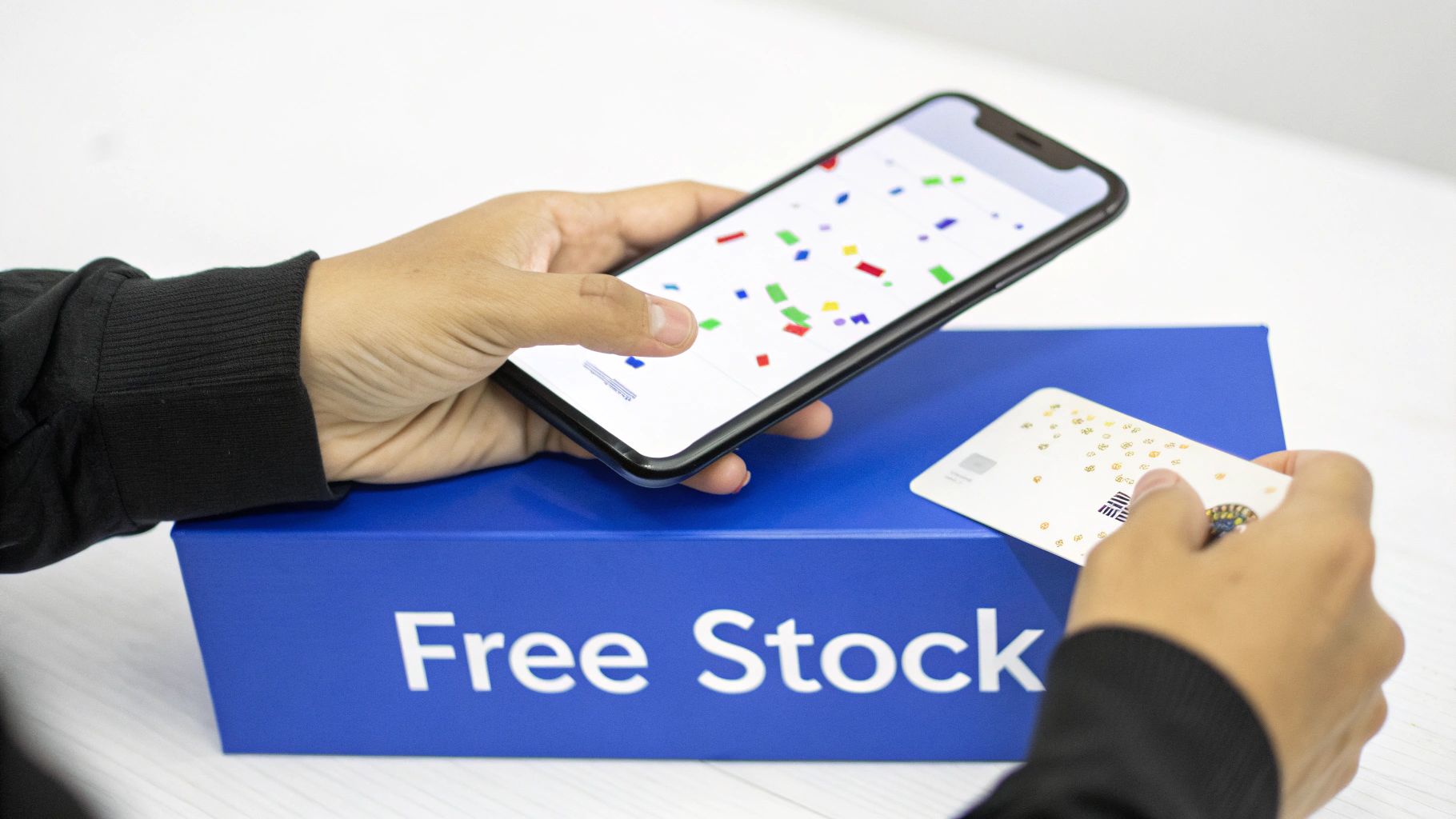
This strategy turned every referral into a potential winning ticket, making the act of sharing inherently shareable. Users were not just inviting friends; they were sharing the excitement of the "stock reveal." This viral loop was a key driver in Robinhood adding over three million funded accounts in a single year during its peak growth, demonstrating the power of a variable, high-perceived-value reward.
Strategic Breakdown
- Incentive: A variable, non-cash reward (a free stock) with a wide potential value range. The mystery and gamification created far more buzz than a fixed cash bonus ever could.
- Mechanics: Users received a unique referral link to share. Once a friend signed up and linked their bank account, both parties could claim their "mystery stock" directly within the app, creating an engaging user experience.
- Integration: The referral program was heavily promoted within the app and through social media campaigns, often showcasing users revealing high-value stocks like Apple or Tesla, which served as powerful social proof.
Key Insight: Robinhood proved that an unpredictable reward can be far more motivating than a fixed one. The element of chance and the potential for a high-value outcome generated immense organic buzz and a strong sense of FOMO.
How to Replicate This Strategy
- Introduce Gamification: Instead of a fixed discount, offer a "mystery box," a "spin the wheel" prize, or a variable credit amount. The key is to create anticipation and make the reward feel like a win.
- Leverage a Two-Sided Variable Reward: Apply the element of chance to both the referrer and the new user. This makes the invitation feel like a shared, exciting experience rather than a one-sided transaction.
- Encourage Social Sharing of Wins: Build features that make it easy for users to share their rewards on social media. Displaying real participants’ big "wins" on your site serves as powerful social proof and fuels the viral loop.
- Align Rewards with Your Product: Robinhood offered stocks, perfectly aligning the incentive with its core business. Find a variable reward that is native to your product, such as a random bundle of premium features, a variable amount of service credits, or exclusive access to one of several high-value resources.
6. Grammarly Premium-Days Referral
Grammarly's referral program is a clever example of referral marketing that uses temporary product access as its core incentive. Instead of offering discounts or cash, Grammarly gives both the referrer and the new user a taste of its premium features for free for a limited time. This "try before you buy" approach is highly effective for freemium SaaS products.
The program creates a low-friction incentive for both parties. Existing users on the free plan are motivated to share to experience powerful premium features like the plagiarism checker and advanced tone adjustments. New users are encouraged to sign up through a referral to start their journey with Grammarly's best tools, leading to a higher perceived value from day one. This strategy has reportedly contributed to a 15% lift in trial-to-paid conversions for the company.
Strategic Breakdown
- Incentive: The reward is not a permanent upgrade but a temporary one: a set number of free Premium days. This lowers the cost for the company while still providing significant value to the user.
- Mechanics: Users share personalized links via email or social media. When a friend signs up, both receive free premium days, which are automatically added to their accounts. Referrers can accrue days to earn entire months of free premium service.
- Integration: The referral offer is prominently featured within the user's account dashboard, making it easily accessible. Grammarly also uses email notifications to remind users about the program and their accumulated rewards.
Key Insight: Giving users a temporary trial of premium features is a powerful sales tool. It allows them to experience the full value of the product, making them more likely to upgrade once the trial period ends.
How to Replicate This Strategy
- Identify High-Value Premium Features: Determine which of your paid features are most compelling. These will be the foundation of your temporary trial reward.
- Use a Time-Based Incentive: Offer a specific number of free days or a week of premium access instead of a discount. This creates urgency and encourages active product usage during the trial period.
- Automate Reward Redemption: Ensure the free premium days are applied to both users' accounts instantly upon a successful referral. A seamless process is crucial for a positive user experience.
- Nurture Users Post-Trial: When the free premium days are about to expire, trigger an automated email campaign. Highlight the features they will lose and present a clear, compelling offer to upgrade to a paid plan.
7. Canva Invite-and-Earn Premium
Canva’s referral program is a brilliant example of referral marketing that leverages its premium subscription tier to drive user acquisition. The program rewards users for sharing the platform by offering a taste of its most powerful features, Canva Pro, at no cost to either the referrer or the new user.
The structure is a compelling two-sided offer: new users receive a free premium asset or a trial of Canva Pro, while the existing user earns one Canva Credit for each friend who signs up. These credits can be redeemed for premium stock photos, icons, and illustrations. This system effectively turns loyal users into advocates by giving them access to the very assets that make the platform so valuable. The seamless integration into the user dashboard makes sharing an effortless part of the creative process.
Strategic Breakdown
- Incentive: The reward is not cash but access to premium in-app resources (Canva Credits). This incentivizes users to explore and become more dependent on the platform’s premium features, increasing the likelihood of upgrading.
- Mechanics: Users are given a unique referral link that can be shared via email, social media, or a direct copy-paste. The process is simple, and progress is tracked directly within the user’s account settings, providing clear visibility.
- Integration: Canva strategically places referral prompts throughout the user experience. For instance, when a free user attempts to use a Pro-only element, they are often presented with an option to invite friends to earn credits for it.
Key Insight: Canva’s program succeeds by using premium features as the currency of referral. This approach not only acquires new users but also acts as a powerful free trial, demonstrating the value of Canva Pro and creating a clear upgrade path.
How to Replicate This Strategy
- Gate-Keep High-Value Features: Identify the most desirable features or content within your premium tier. Structure your referral program to offer temporary or limited access to these assets as a reward.
- Implement a Two-Sided Credit System: Give new users an initial credit or premium item to experience the value firsthand. Reward the referrer with stackable credits they can use to unlock more premium content, encouraging repeat referrals.
- Use Contextual Prompts: Trigger referral CTAs at moments of high intent. When a user tries to access a paid feature or completes a project they are proud of, prompt them to share and earn rewards.
- Visualize Progress: Create a dedicated area in the user dashboard where referrers can easily track their earned credits and see how many friends have signed up. This gamifies the experience and motivates continued participation.
8. Slack Team-Invite Viral Growth
Slack’s referral strategy is a powerful example of referral marketing built directly into the product’s core function: team collaboration. Instead of a traditional referral link, its growth mechanism was the simple, organic act of a user inviting colleagues to their workspace. This transformed every user into an advocate by default.
This "product-led" referral model created a powerful internal viral loop. As one person started using Slack and invited a few teammates, the tool's value grew exponentially with each new member. This organic adoption within organizations naturally led to entire departments and companies standardizing on the platform, seamlessly converting free workspaces into paying customers as teams hit usage limits and required premium features. This approach was instrumental in Slack reaching 1 million daily active users within two years.

Strategic Breakdown
- Incentive: The reward was intrinsic and immediate: enhanced productivity and better team communication. The more colleagues a user invited, the more useful the product became for everyone involved.
- Mechanics: Slack made inviting others incredibly simple, embedding "Invite People" prompts throughout the user interface. Users could quickly invite colleagues via email, and the platform handled the rest of the onboarding.
- Integration: Team invites are a fundamental feature, not an add-on campaign. The call-to-action is persistent within every channel and user directory, encouraging constant expansion of the workspace.
Key Insight: Slack proved that the most effective referral incentive is an improved product experience. By tying growth to the core value proposition of collaboration, they created a self-perpetuating acquisition loop without offering external rewards.
How to Replicate This Strategy
- Identify Collaborative Value: Determine how your product becomes more valuable when used by a team. This could be shared dashboards, collaborative editing, or simplified project management.
- Make Invites Effortless: Design a frictionless team invitation flow. Place clear "Invite Teammate" CTAs in high-traffic areas of your app. Pre-populate invitation messages to make sharing instant.
- Create a Natural Upgrade Path: Gate advanced collaboration features or user seats behind a premium plan. As free teams grow through organic invites, they will naturally encounter these limits and have a clear reason to upgrade.
- Showcase Team Benefits: Use in-app messaging and onboarding tours to highlight features that are most powerful when used by a group. This educates users on why they should invite their colleagues.
Comparison of 8 Referral Programs
Putting It All Together: Launch Your Referral Program with Confidence
We've explored a wide range of powerful referral marketing examples, from Dropbox’s seamless integration to Robinhood’s gamified stock rewards. Each case study, whether from SaaS giants like Slack or e-commerce pioneers like Airbnb, offers a unique blueprint for turning happy customers into a formidable growth engine. The journey through these strategies reveals a set of universal truths about what makes a referral program not just good, but truly exceptional.
The core lesson is this: the most successful referral programs are not afterthoughts. They are deeply integrated into the product experience, appearing at the exact moment a user feels a surge of satisfaction. They understand human motivation, aligning incentives perfectly with the core value of the product itself.
Key Strategic Pillars from Successful Examples
As you prepare to build your own program, it's crucial to distill the core principles that unite these diverse examples. These pillars are the non-negotiable foundations for a high-performing referral system.
- Align Incentives with Value: Dropbox gave away storage space, its core product. Airbnb offered travel credits, directly fueling the user's next adventure. The best rewards aren't just cash; they are an extension of your product's value, encouraging deeper engagement and loyalty.
- Embrace Two-Sided Rewards: Nearly every powerful example of referral marketing we analyzed featured a dual-sided incentive. This structure is a psychological masterstroke. It transforms the referral from a selfish act ("I get a reward") into a generous one ("I'm giving my friend a discount"), removing social friction and dramatically increasing share rates.
- Simplify the Sharing Process: Uber made sharing a referral code a one-tap action within its app. Canva placed its invite prompts directly in the user's workflow. The easier you make it for advocates to share, the more they will. Any unnecessary step, form field, or confusing instruction is a point of failure.
Your Actionable Roadmap to Launch
Moving from theory to practice can feel daunting, but you can break it down into manageable steps. Don't try to build the most complex program from day one. Instead, focus on launching a solid foundation based on the insights from these proven winners.
- Identify Your "Aha!" Moment: Pinpoint the exact moment in your customer journey where users experience the most value. Is it after they complete their first project, receive their first payout, or see a positive result? This is your prime real estate for a referral prompt.
- Define Your "Golden" Incentive: What is the one reward that is both cost-effective for you and highly desirable for your users? Brainstorm options for both the referrer and the referred friend that feel compelling and directly related to your service.
- Craft Clear, Concise Messaging: Your call to action should be simple and benefit-driven. Instead of "Refer a Friend," try "Give Friends $20, Get $20." Clearly state what both parties will receive, leaving no room for ambiguity.
- Automate and Measure Everything: Manual tracking is a recipe for errors and scalability issues. From the moment you launch, use a dedicated platform to generate unique links, track conversions in real-time, and handle payouts automatically. This frees you up to focus on optimization, not administration.
As you prepare to launch your own initiatives, the landscape of marketing continues to evolve. For those operating in emerging tech spaces, it's also worth considering strategies for launching a high-impact Web3 referral program that leverages on-chain mechanics for robust growth.
By internalizing the lessons from each example of referral marketing and following a structured implementation plan, you can build a program that doesn't just acquire new customers; it acquires your best customers. These are users who arrive with built-in trust and a higher propensity to become loyal advocates themselves, creating a self-perpetuating cycle of high-quality growth.
Ready to turn these examples into your reality? LinkJolt provides the complete toolkit to build, automate, and scale a powerful referral program just like the ones we've analyzed. Stop wrestling with spreadsheets and manual payouts, and start building your growth engine today with LinkJolt.
Watch Demo (2 min)


Trusted by 300+ SaaS companies
Start Your Affiliate Program Today
Get 30% off your first 3 months with code LINKJOLT30
✓ 3-day free trial
✓ Cancel anytime