Build Winning Affiliate Programs for Software
Build Winning Affiliate Programs for Software

Ollie Efez
September 25, 2025•20 min read
Software affiliate programs are a ridiculously powerful way to grow. The concept is simple: you partner with people (your 'affiliates') and reward them with a commission for sending you new customers. It’s a purely performance-based model, meaning you only pay when you get a real result, making it a smart way to get new users at a cost you can actually predict.
Why Affiliate Programs are a Secret Weapon for Software Growth
Look at any major software company, and you'll likely find a thriving affiliate program. They don't just see it as another marketing channel; for many, it's a core part of their growth machine. Why? Because it goes way beyond just running ads. It taps into the power of a genuine recommendation from a trusted source.
When a blogger, YouTuber, or industry expert your audience already follows recommends your software, that endorsement carries a ton of weight. It’s far more convincing than any ad you could ever run yourself.
This is a massive advantage, especially if you're the new kid on the block. A SaaS startup, for instance, can team up with key creators in their niche to start making noise and competing with the big guys. These affiliates have spent years building trust with their audience—trust that you can tap into almost overnight. It's an incredible shortcut to reaching highly relevant people who might otherwise never hear of you.
Finally, a Cost-Effective Way to Get Customers
One of the biggest draws of an affiliate program is the financial model. It's just plain smart. With paid ads, you're shelling out cash for every click or impression, whether it leads to a sale or not. Affiliate marketing flips that on its head.
You only pay a commission when an affiliate actually delivers on a specific action, like a paid subscription or even a qualified trial signup. This gives you a predictable and scalable customer acquisition cost (CAC), which is a dream for any founder or marketing lead.
This efficiency makes a huge difference.
- For Startups: It lets you punch above your weight without needing a colossal marketing budget. In fact, many successful companies start by exploring affiliate solutions for SaaS startups to get that crucial early traction.
- For Established Brands: It’s a fantastic way to diversify your marketing mix. You can even break into new international markets by partnering with local experts who know the language and culture inside and out.
The numbers don't lie. The global affiliate marketing space was valued around $18.5 billion in 2025 and is expected to rocket to $31.7 billion by 2031. This isn't just a trend; it's a fundamental shift. SaaS affiliate programs are especially hot, with commissions often ranging from 20% to a whopping 70%, making them incredibly appealing to top-tier marketers. You can find more stats on the industry's growth over on Hostinger.com.
Building a Fortress of Trust and Authority
An affiliate program does more than just drive sales. It builds a network of genuine brand fans who are out there creating content about your software.
Every review, tutorial, and comparison video they publish acts as another piece of social proof. It reinforces your software's value and solidifies its place in the market. Over time, this content creates a powerful "moat" of authority around your brand that competitors will find nearly impossible to copy.
A great affiliate program doesn't just get you partners; it builds an extension of your marketing team. They don't just send clicks—they educate potential customers, build trust on your behalf, and send highly-qualified leads your way. This leads to better conversion rates and customers who actually stick around.
Laying the Groundwork for Your Program
Jumping straight into recruiting affiliates without a solid plan is a fast track to a program that never gets off the ground. I've seen it happen. The most successful affiliate programs for software are built on a strategic foundation that lines up incentives, sets clear rules, and uses the right tech. This groundwork is what makes the difference between a program that thrives and one that just fizzles out.
Think of it like building a house—you wouldn't start putting up walls without a blueprint. It's the same idea here. Defining your goals, commission structure, and tracking system is your blueprint for a program that attracts top-tier partners and actually delivers results you can measure.
Figure Out What Success Actually Looks Like
Before you can even think about commissions or platforms, you need to nail down one primary goal. What's the single most important action you want your affiliates to drive? Just saying "more sales" is too vague to be useful.
You need to get specific. Are you trying to:
- Boost free trial sign-ups? This is a fantastic goal for SaaS products where the product itself does the selling (product-led growth).
- Generate qualified enterprise leads? If you have a longer, more hands-on sales cycle, you might reward partners for getting potential customers to book a demo or fill out a detailed form.
- Drive adoption of a specific feature? You could run a special campaign that pays affiliates for getting new or existing users to try out a new part of your software.
- Increase direct premium subscriptions? This is the most straightforward goal, focused purely on bringing in immediate, paying customers.
Your main objective will shape every other decision you make. A program centered on enterprise leads will look completely different—from the commission model to the type of partners you recruit—than one focused on high-volume trial sign-ups.
Design a Commission Structure That Motivates
Your commission structure is the engine of your affiliate program. It has to be simple enough for partners to grasp, exciting enough to grab their attention, and profitable enough for you to sustain. The structure you pick says a lot about the kind of partnership you're trying to build.
Here’s a look at the most common models for software affiliate programs to help you decide which is the best fit.
Choosing Your Affiliate Commission Model
Ultimately, the right commission model creates a win-win. It should feel incredibly generous to your partners while still making sense with your customer acquisition cost (CAC) and lifetime value (LTV). For a deeper look at this, check out our complete guide on creating an affiliate commission structure.A Quick Tip: The best commission models feel like a true partnership. If your affiliates are winning big, it means you're winning big. Never skimp on rewarding the people who are essentially your remote sales team.
This image shows how a strong partnership is built on collaboration—a key outcome of a well-designed program.
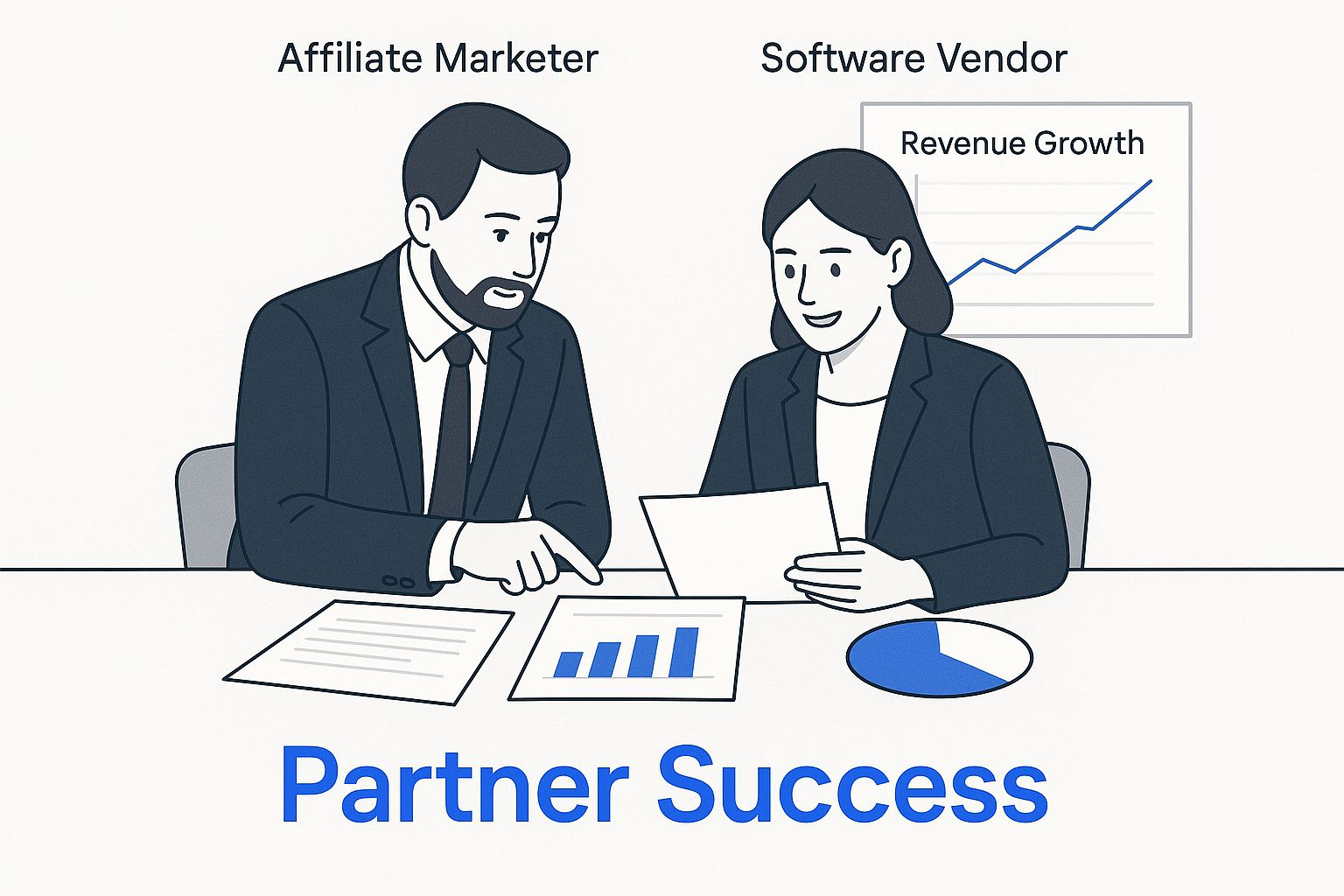
The visual drives home the point that a solid foundation isn't just about numbers; it's about creating an environment where your partners feel valued and set up for success from day one.
Pick Your Technology Platform
Finally, you need the right tech to track referrals, manage your partners, and handle payouts. Your choice here really comes down to two paths: using an established affiliate network or running the program yourself with dedicated software.
- Affiliate Networks: Platforms like PartnerStack or Impact.com come with a built-in marketplace of affiliates, which can give you a nice head start. The downside? They often charge network fees on top of commissions and give you less control over branding and the direct relationship with your partners.
- Self-Hosted Software: Using a tool like LinkJolt or Tapfiliate gives you full ownership. You build direct relationships, customize the entire experience, and usually pay a flat software fee instead of a percentage of sales. The trade-off is that you're on the hook for recruiting all of your own partners.
For most software companies wanting to build strong, long-term partnerships, using dedicated software is the way to go. It offers more flexibility and better economics as you grow, allowing you to build a real community around your brand instead of just being another offer in a crowded marketplace.
How to Find and Recruit Great Partners
You've got a solid program foundation, a commission structure that actually motivates people, and your tracking is locked in. Now for the make-or-break moment: finding the right people to join.
The quality of your partners will absolutely define your program's success. Simply opening the floodgates and approving anyone who signs up is a fast track to poor performance, headaches, and even potential brand damage.
The real goal isn't just to find people with a big audience. You need partners whose audience is a mirror image of your ideal customer. These are the folks who will drive not just clicks, but high-quality, long-term customers who stick around.
Look Beyond the Obvious Affiliate Lists
Your first thought might be to Google "top SaaS affiliates," but that's rarely where the magic happens. The best partners aren't always professional affiliates promoting a dozen different tools.
The real gold is in finding creators and experts who have a genuine need for your software and have built unshakable trust within your specific niche.
Here’s where you should focus your energy:
- Your Power Users: Nobody sells your product better than your happiest customers. They already know it, love it, and use it every day.
- Content Creators in Your Niche: This means YouTubers, bloggers, and newsletter writers who are already creating content your ideal customers are binge-watching and reading.
- Strategic B2B Partners: Think non-competing software companies that serve the exact same type of customer you do. A partnership here can be a game-changer.
Turn Happy Customers into Brand Advocates
Your most passionate customers are a goldmine waiting to be tapped. They can talk about your software with an authenticity that's impossible for you to replicate in a marketing campaign. The only trick is getting them on board.
First, you need to figure out who your power users are. Dig into your product data. Look for customers with high engagement metrics, long subscription histories, or those who have upgraded their plans multiple times. An even easier way? Send out a Net Promoter Score (NPS) survey. Anyone who gives you a 9 or a 10 is a prime candidate for your program.
Once you have that list, reach out with a personal email. Please, do not send a generic "Join Our Affiliate Program!" email blast. It just doesn't work.
Pro Tip: Your outreach to customers should feel like an exclusive invitation, not a marketing email. Frame it as a special thank you for their loyalty and an opportunity for them to earn rewards by sharing a tool they already love. This approach has a much, much higher success rate.
A simple email might say something like, "Hey [Name], we noticed you're one of our top users for [Your Software], and we're so grateful to have you. We're launching a new partner program and thought of you immediately. Any interest in earning a recurring commission just for sharing it with your network?"
Find Influential Niche Creators
Next up, it’s time to do some digital detective work and find content creators who speak directly to your target audience.
- YouTube Search: Jump on YouTube and search for keywords related to the problems your software solves. If you sell a project management tool, you're not searching for your brand name; you're searching for "how to manage small business projects" or "best productivity tools for teams." Find the channels producing killer tutorials and reviews.
- Google Search for "Best Of" Lists: Look for terms like "best [your software category] tools" or "[your competitor] alternatives." The bloggers and review sites that dominate these search results have an audience that is actively looking for a solution like yours.
- Social Listening: Keep an eye on hashtags and discussions on platforms like X (formerly Twitter), LinkedIn, or niche Facebook Groups. Who are the go-to experts everyone in your industry listens to? These people are your potential super-affiliates.
Once you've found a good fit, your outreach has to cut through the noise. Generic emails get deleted on sight. Show them you've actually done your homework. Mention a specific video or article of theirs you enjoyed and explain exactly why you think your software would be a perfect match for their audience. Don't forget to offer a free, extended license so they can really put it through its paces.
Forge Strategic Integration Partnerships
This is one of the most powerful but underutilized strategies out there. Find non-competing software companies and partner up with them. If your software integrates well with another tool, their entire customer base is a pre-qualified pool of perfect leads for you.
For example, if you offer an email marketing tool, partnering with a landing page builder like Leadpages is a no-brainer. Their customers need your solution, and your customers need theirs.
Find the partnership or marketing managers at these companies and reach out. You can propose a co-marketing arrangement where you promote each other's tools as ideal integration partners. This can be a simple affiliate relationship or grow into co-hosted webinars, guest blog posts, and shared ad campaigns. It's a true win-win that provides massive value to both of your audiences and can drive a ton of high-quality sign-ups.
Give Your Affiliates Everything They Need to Win
Getting a new partner to sign up is just the starting line. The real work—and the real results—kick in when you stop focusing on recruitment and start focusing on activation. The best affiliate programs for software don't just see their partners as lead sources; they treat them like an extension of the marketing team. That means giving them the tools, resources, and support they need to actually succeed.
Just handing over a referral link and hoping for the best is a recipe for a dead-end program. Your affiliates are busy. They're creators, marketers, and business owners. The easier you make it for them to talk about your software, the more sales they’ll bring in. It's this proactive approach that separates a program that fizzles out from one that becomes a massive growth channel.
Build a Killer Partner Resource Center
The foundation of a great affiliate program is a well-organized, easy-to-use resource center or partner portal. This is your affiliates' home base for everything they need. It should be loaded with high-quality assets that make promoting your product almost effortless.
And I mean more than just a folder with your logo in it. You need to give them a complete marketing toolkit.
- High-Converting Creatives: Arm them with a variety of banners, social media graphics, and even short video clips. Offer different sizes and formats, and make sure they look professional and match your brand.
- Ready-to-Use Swipe Copy: This is huge. Write email templates, social media posts, and ad copy that partners can either copy-paste directly or tweak for their own voice. It saves them a ton of time and keeps your core message on point.
- Deep-Dive Product Info: Don't make your partners dig for details. Give them comprehensive product guides, feature lists, case studies, and customer testimonials they can pull from for their own content.
Your partner resource center should answer every question an affiliate might have before they even think to ask it. When they can find what they need on their own, they can spend more time doing what they do best—creating content and driving traffic.
Communication Is Your Superpower
A silent affiliate program is an inactive one. You have to keep the lines of communication open. Regular, valuable check-ins keep your partners engaged, informed, and motivated. It shows you’re actually invested in their success, which in turn makes them want to invest their time in promoting you.
This isn’t about spamming their inbox every day. It’s about creating a consistent, helpful rhythm.
- Monthly Partner Newsletter: This is non-negotiable. Use it to share program updates, give a shout-out to top performers, announce new product features they can promote, and offer timely marketing tips.
- A Dedicated Affiliate Manager: Having a single person they can talk to is a game-changer. This person can answer questions, offer one-on-one support, and build real relationships with your most valuable partners.
- An Exclusive Community: Think about a private Slack channel or Facebook Group just for your affiliates. It’s a fantastic way to build a community where partners can share strategies, ask questions, and give you direct feedback.
For instance, when you're about to launch a new feature, your affiliate manager can reach out personally to top partners with early access. A simple message like, “Hey [Partner Name], we’re launching our new AI assistant next month and thought your audience would love it. Want early access to create a review video?” can build incredible momentum.
When you provide this kind of support, the relationship shifts from a simple transaction to a true partnership. Equipped and supported affiliates become your most effective advocates, driving predictable and sustainable growth for your software.
How to Optimize and Scale Your Program
Getting your affiliate program off the ground is one thing, but the real work starts now. Think of it as a living, breathing part of your business—not just another "set it and forget it" channel. Consistent, thoughtful optimization is what separates a program that trickles in a few sales from one that becomes a reliable engine for growth.
That means you have to look past the easy vanity metrics. Clicks and sign-ups are great, but they don't paint the full picture. The best affiliate programs for software are built by digging deeper into what’s actually happening after the click.
You’re on the right track when you can answer questions like: "Which partners are sending us customers who stick around the longest?" or "Which affiliates have the lowest churn rates?" This is where the gold is. That data is your roadmap to smart, scalable growth.
Identify and Empower Your Top Performers
You’ve probably heard of the Pareto Principle, and it absolutely applies here. It’s almost a given that 80% of your results will come from just 20% of your partners. Your first job is to pinpoint who that top 20% is and give them everything they need to promote your software even more.
Get into your analytics and find the partners driving real value, not just volume. You're looking for affiliates whose referrals consistently show:
- High Customer Lifetime Value (LTV): These are the customers who stay subscribed and are the most profitable over time.
- Low Churn Rates: Their audience is a perfect fit, meaning referrals are less likely to cancel.
- High Upgrade Rates: Their traffic is more inclined to move from a free trial or basic plan to a premium one.
Once you know who your all-stars are, it's time to treat them like it. Create a VIP tier with special incentives. Performance bonuses for hitting sales milestones or a tiered commission structure that unlocks higher rates can be incredibly motivating. Never underestimate the power of a personal email from a dedicated affiliate manager, either—it makes them feel like a genuine partner.
Re-Engage Your Inactive Affiliates
It's completely normal for a huge chunk of your signed-up affiliates to go quiet. They might have had great intentions but got sidetracked, or maybe they just weren't sure how to get started. Often, all they need is a little nudge to get them back in the game.
Set up an automated email sequence for partners who haven't sent a click or referral in their first 30-60 days. This isn't about being pushy; it's about being helpful. You can share case studies of your top partners, highlight your best-performing creative assets, or even offer to jump on a quick call to brainstorm content ideas.
Sometimes, a personal touch is what it takes to wake up a dormant partner. A simple email like, "Hey, I saw you write about [relevant topic]. Our new [software feature] could be a great fit for a follow-up article," proves you’re paying attention and are invested in their success.
Brands using affiliate marketing report an average ROI of $15 for every $1 spent, which shows just how profitable this can be. By 2025, over 81% of brands will be using these strategies, and SaaS companies are leading the charge with commissions ranging from 20% to 70%. For 27.8% of brands, blogs are still the go-to channel for educating and converting software customers. You can explore more affiliate marketing statistics on Thunderbit.com if you want to dig into the numbers.
Know When to Prune Your Program
Scaling a program isn't just about adding more affiliates—it's also about knowing when to let some go. You have to regularly audit your program for partners who are simply not a good fit. This means anyone violating your terms, using spammy tactics, or driving tons of low-quality traffic that never converts.
These partners can do more than just waste your time; they can actively damage your brand's reputation. Don't be afraid to clean house. Removing inactive or problematic affiliates keeps your program healthy and lets you pour your energy into the partners who are actually moving the needle. This kind of strategic pruning is one of the most important affiliate marketing best practices you can adopt for long-term success.
Got Questions About Your Software Affiliate Program? We've Got Answers

As you start piecing together your affiliate strategy, a few questions always seem to pop up. Let's get ahead of them. Answering these common queries now will save you a ton of headaches and help you build a much stronger program from the get-go.
What's a Good Commission Rate for a SaaS Product?
This is the big one, isn't it? The one everyone wants to know first. For most SaaS companies, a recurring commission between 20% and 40% is the sweet spot. Affiliates love this model because it builds a predictable, passive income stream for them, which keeps them motivated to promote you month after month.
Another popular route is offering a big, one-time payout, like 100-200% of the first month's subscription fee. This can be really appealing for affiliates who are focused on quick wins.
Ultimately, the right number for you comes down to your own math. You have to look at your Customer Lifetime Value (LTV) and Customer Acquisition Cost (CAC). The commission has to be attractive enough to land top-tier partners but sustainable enough that it doesn't sink your business.
How Can I Stop Affiliate Fraud?
Fraud is a real concern, but you can absolutely keep it under control with a proactive mindset. The key is to build your defenses right from the start.
First off, make sure your affiliate platform has solid, built-in fraud detection. Good software will automatically flag sketchy behavior like click stuffing or cookie dropping before it becomes a major issue.
Next, don't automate your affiliate approvals. Take a few minutes to personally vet every applicant. Does their website look legit? Is their content relevant to your product? A quick look can tell you if you’re dealing with a genuine creator or a brand-new site with zero authority.
Finally, your terms of service are your best friend. Be crystal clear about what's not allowed.
- PPC Bidding: Explicitly forbid partners from bidding on your branded keywords unless you give them the green light.
- False Claims: Make it clear that misleading ads or exaggerated promises about your software are off-limits.
- Coupon Abuse: Set firm rules on how promo codes can be shared to stop them from ending up on mass discount sites.
Keep an eye on your data. A sudden spike in clicks with no conversions is a classic red flag that something fishy is going on.
Should I Use an Affiliate Network or Run the Program Myself?
This is the classic "control vs. convenience" debate. Joining a network like Impact or PartnerStack gives you immediate access to a huge pool of affiliates. It can be a great way to get moving quickly, but you'll pay network fees and have less direct control over your relationships.
Running your own program with dedicated software means you're in the driver's seat. You own the relationships, you customize everything, and you usually save a lot of money in the long run. The flip side? You're on the hook for recruiting, managing, and paying everyone yourself.
For most software companies, I’ve found that starting an in-house program builds much stronger, long-term partnerships. A network can be a smart move if your only goal is to recruit a high volume of affiliates as fast as possible.
How Long Before I Actually See Results?
Here’s where you need to be patient. Affiliate marketing is a marathon, not a sprint. It’s all about building real relationships and gaining momentum over time.
Realistically, you should expect to spend the first three to six months just recruiting and onboarding your first wave of quality partners. You might see a few sales trickle in during this phase, but the consistent, predictable revenue usually starts to build after the six-month mark.
A well-run program should become a solid growth channel within the first year. The ramp-up time really depends on your brand, who you partner with, and how well you set them up for success. The more support and resources you give your affiliates, the faster they'll start delivering.
Ready to take control of your partnerships? LinkJolt gives you all the tools you need to build, manage, and scale your own affiliate program without the hefty network fees. Start your journey with LinkJolt today and turn your biggest fans into your best marketers.
Watch Demo (2 min)


Trusted by 300+ SaaS companies
Start Your Affiliate Program Today
Get 30% off your first 3 months with code LINKJOLT30
✓ 3-day free trial
✓ Cancel anytime